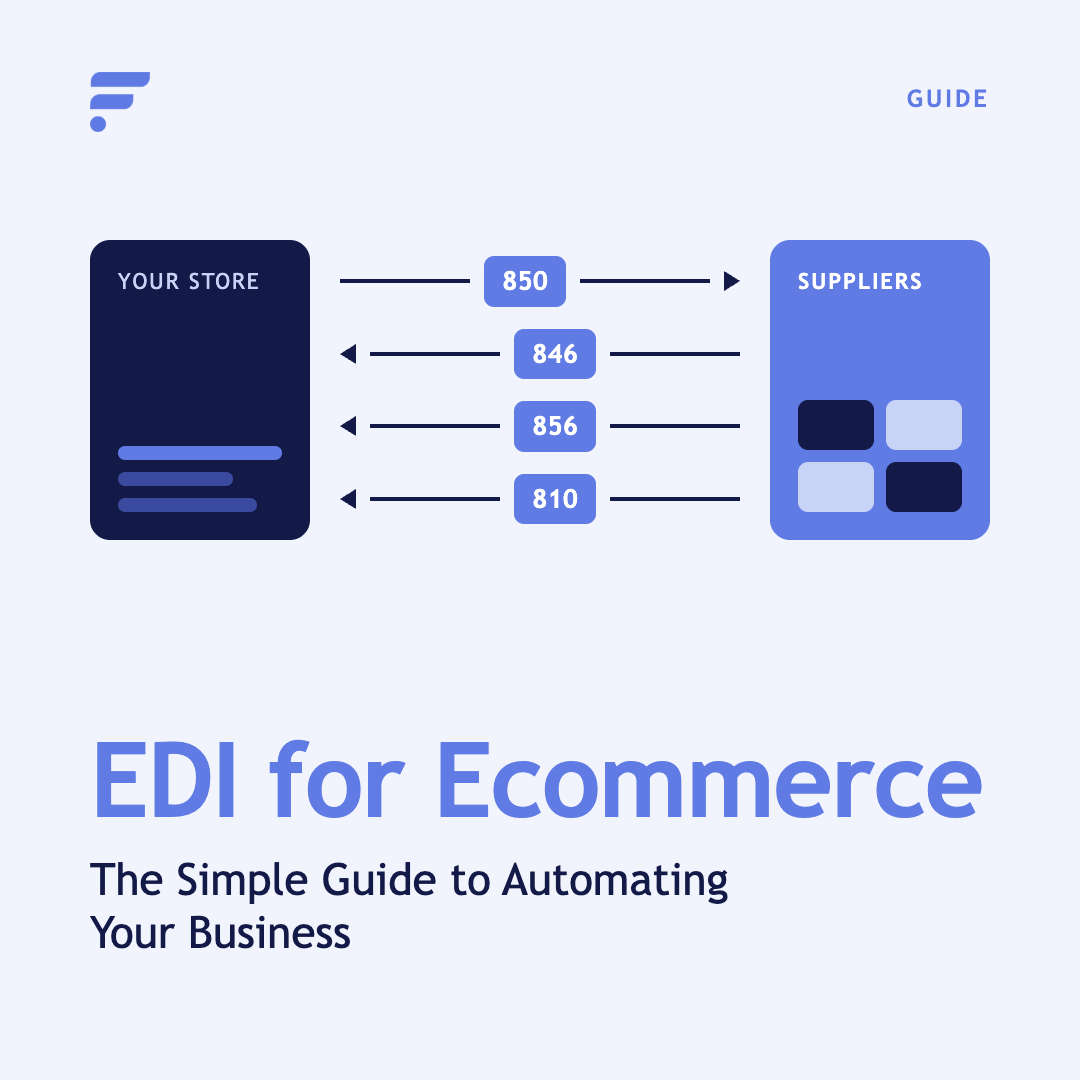
Ecommerce Integrations EDI Guide EDI for Ecommerce: The Simple Guide to Automating Your Business
EDI can remove repetitive ecommerce operations work, but getting started requires more than connecting a supplier and sending purchase orders. You need to understand EDI documents, trading partner requirements, system flows, and how EDI fits into your broader order, inventory, and fulfillment workflows.
What will you learn in this EDI guidebook?
Learn how EDI works in ecommerce, from purchase orders and inventory updates to supplier integrations, APIs, implementation, and multi-supplier workflows.
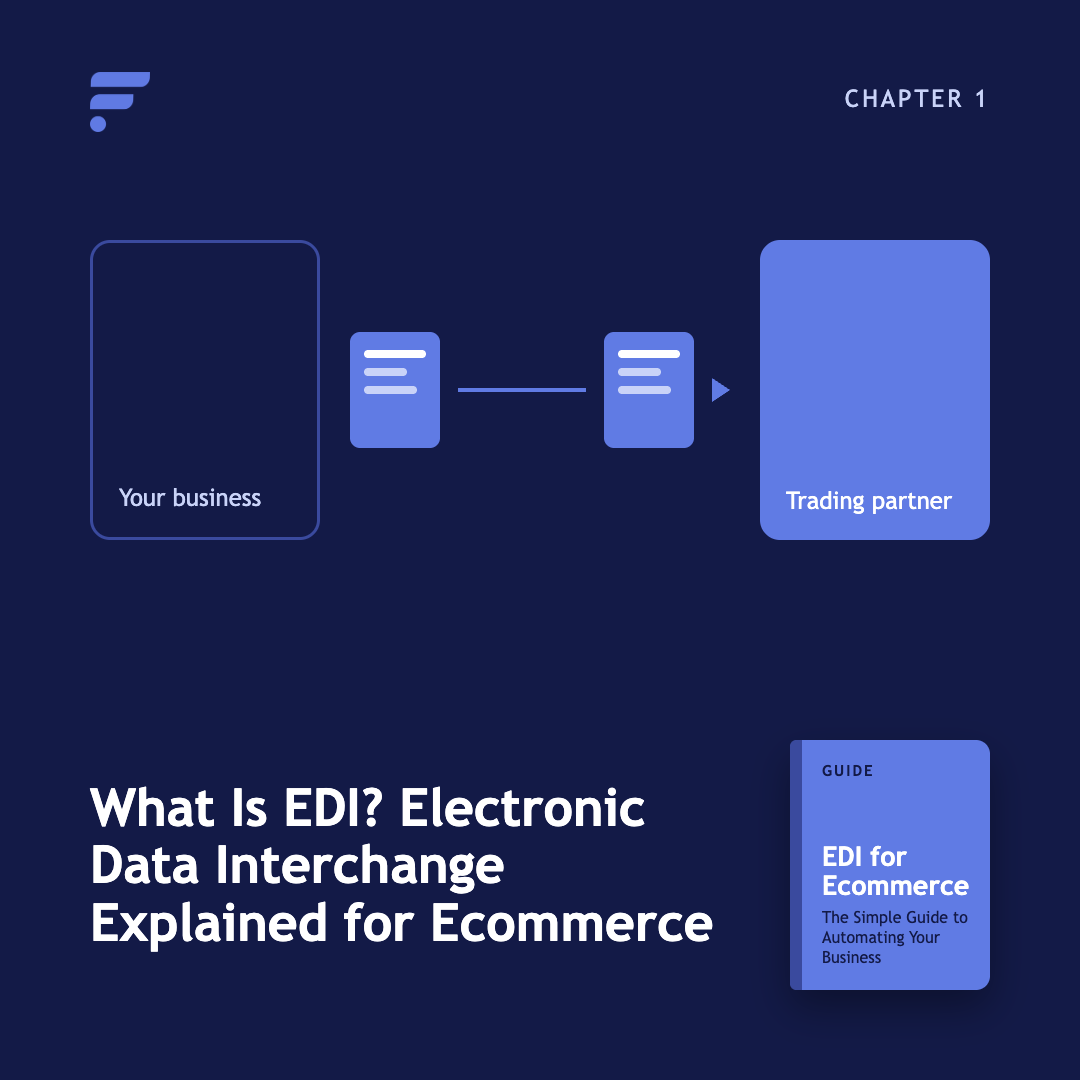
Chapter 1. What Is EDI? Electronic Data Interchange Explained for Ecommerce
Start with the fundamentals. Learn what Electronic Data Interchange is, how businesses exchange structured documents electronically, and where EDI fits into ecommerce operations.
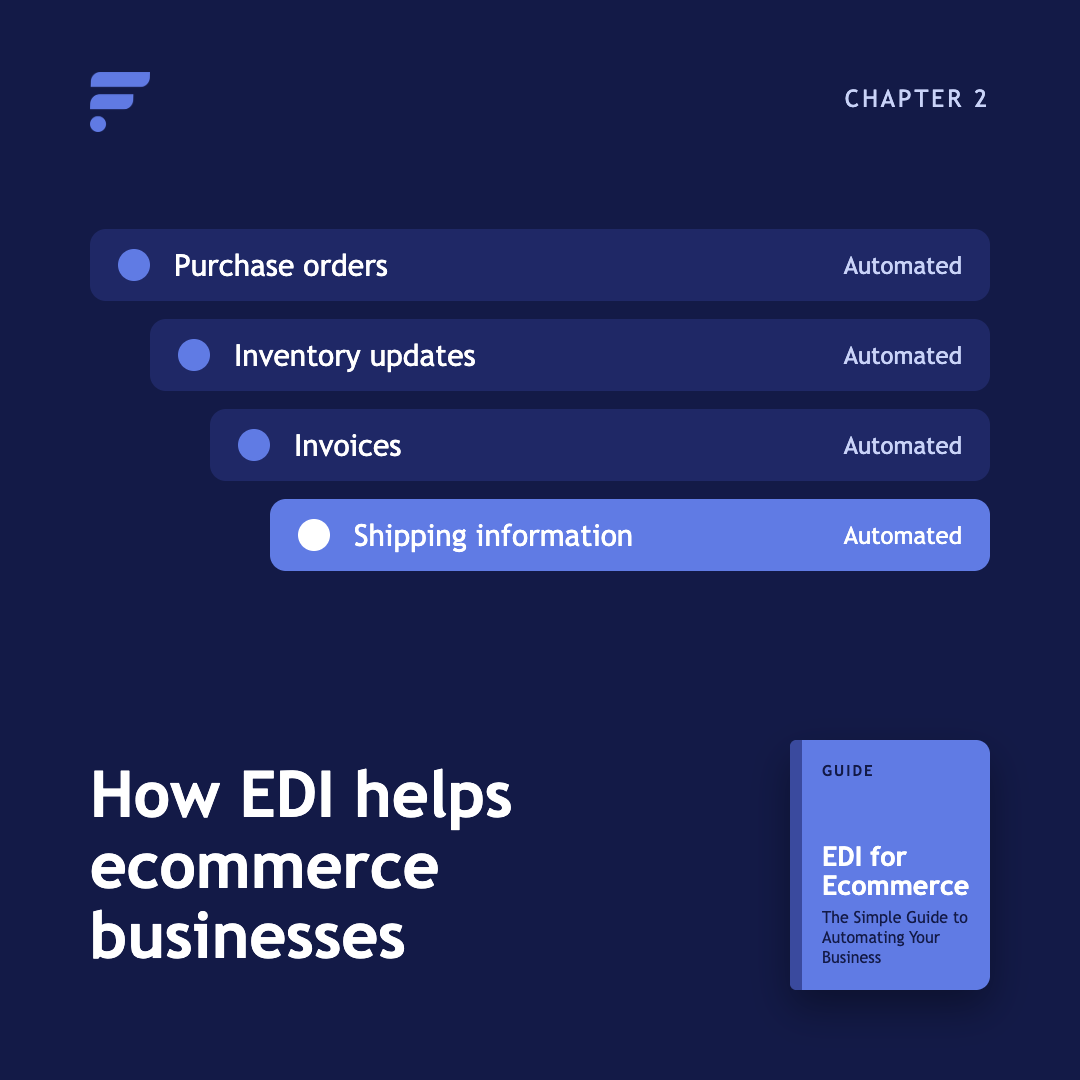
Chapter 2: How EDI Helps Ecommerce Businesses
See how EDI can support purchase orders, inventory updates, invoices, shipping information, and other recurring ecommerce workflows.
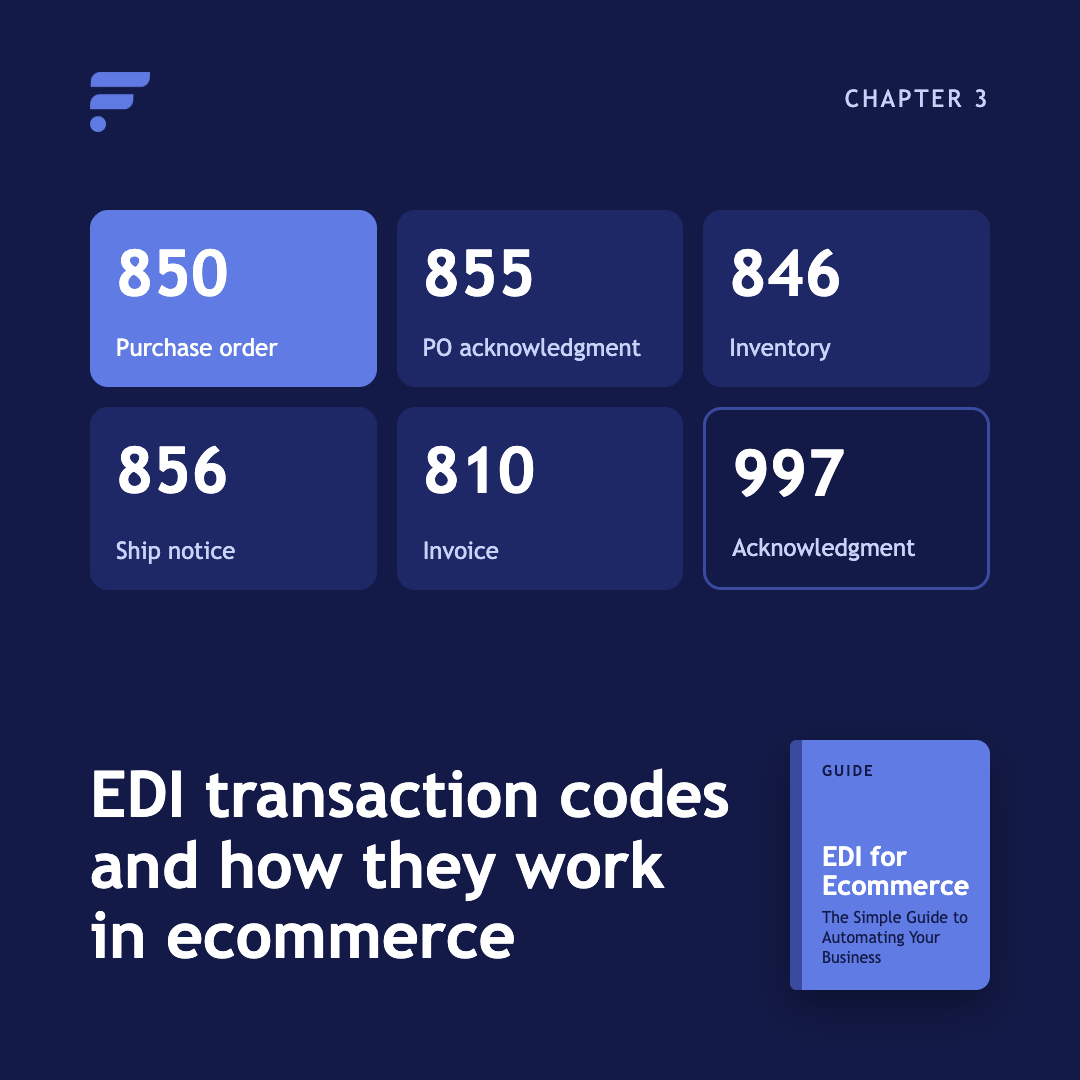
Chapter 3. EDI transaction codes and how they work in ecommerce
Explore practical ways ecommerce businesses use EDI codes, including automated ordering, inventory synchronization, fulfillment workflows, and supplier communication.
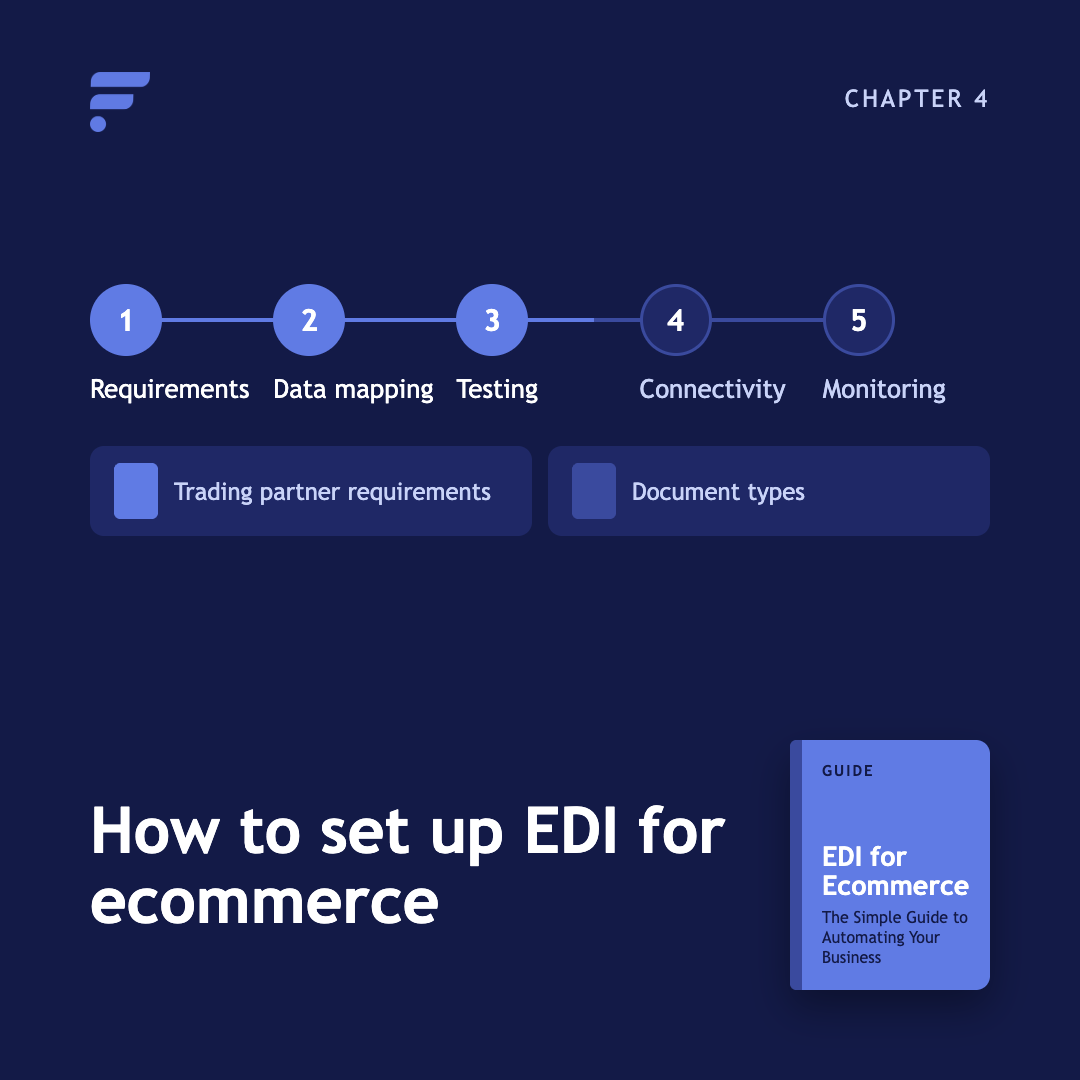
Chapter 4. How to set up EDI for ecommerce
Learn what you need before implementation, from trading partner requirements and document types to data mapping, testing, connectivity, and ongoing monitoring.
Chapter 5. EDI vs. manual work
Compare automated EDI workflows with manual processes such as spreadsheets, email, and data entry. Understand where automation can reduce repetitive work and improve consistency.
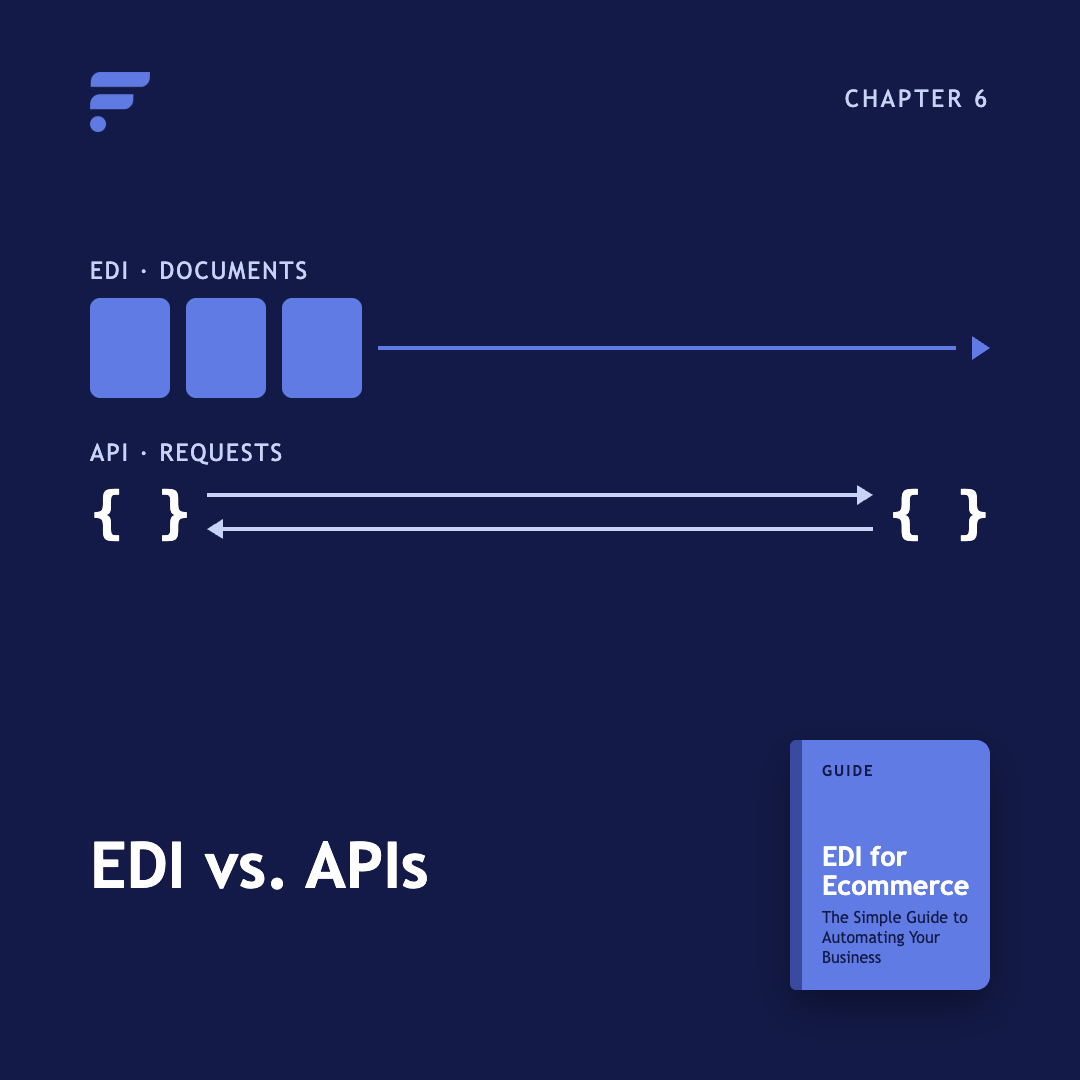
Chapter 6. EDI vs. APIs
EDI and APIs solve different connectivity problems. This chapter explains how they differ, where each works best, and why ecommerce businesses may use both.
Chapter 7. The future of EDI in ecommerce
Explore how cloud systems, automation, connected platforms, and changing ecommerce requirements are shaping the role of EDI.
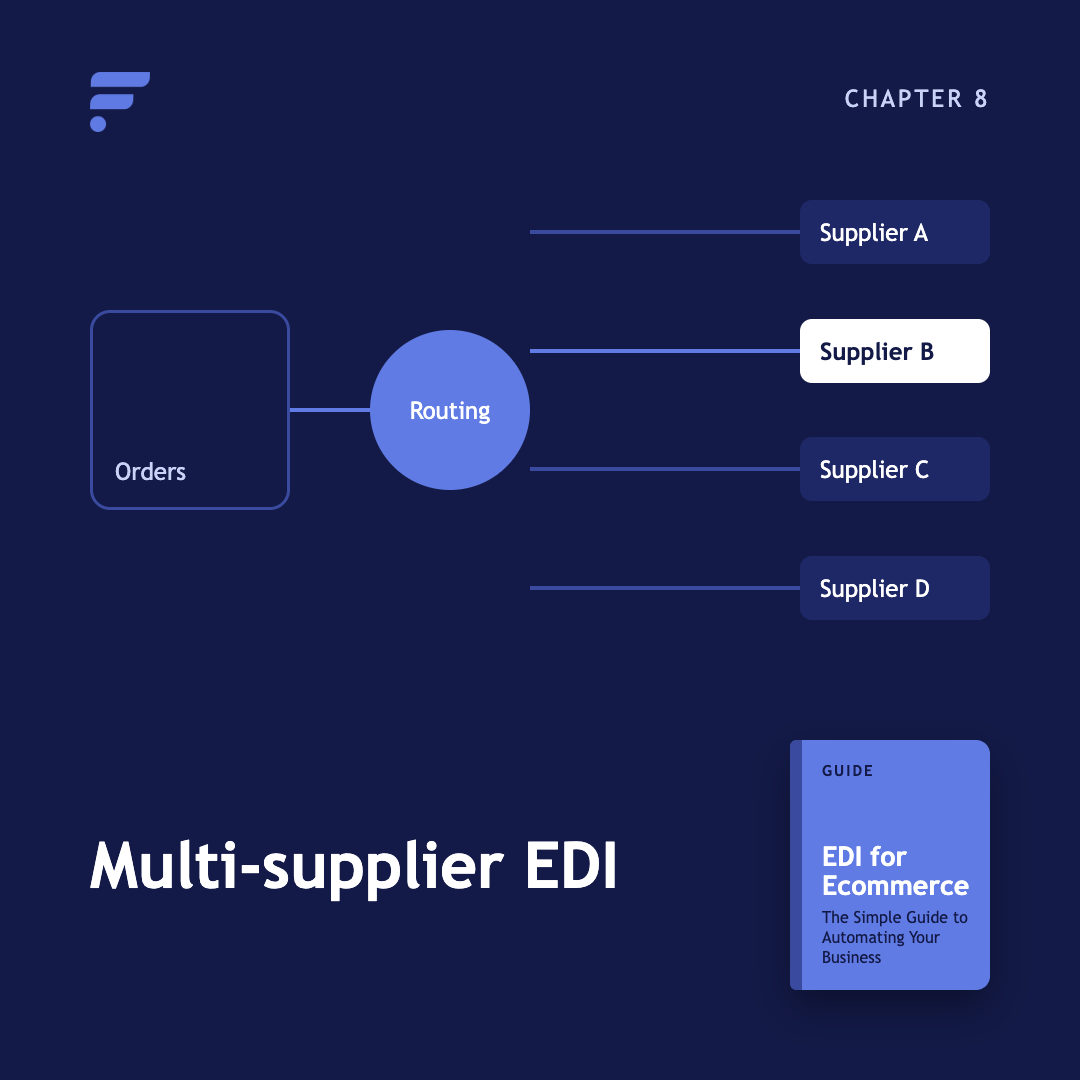
Chapter 8. Multi-supplier EDI
What happens when you run EDI across many suppliers at once, and why order routing matters more than the transaction itself. Learn how EDI fits into a broader multi-supplier ecommerce operation.
Chapter 9. EDI glossary
New to EDI terminology? Use this glossary to quickly understand common terms, documents, standards, protocols, and concepts.
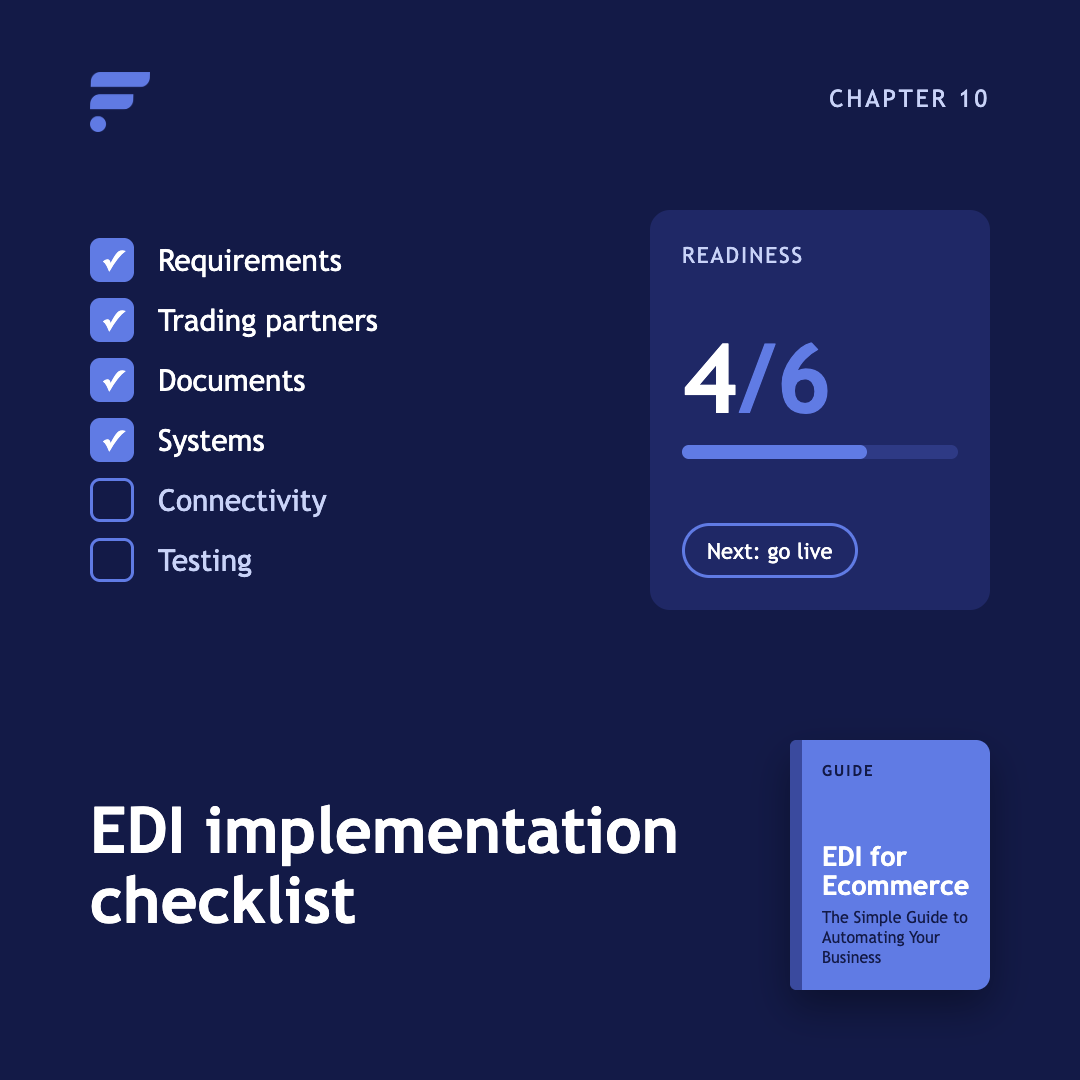
Chapter 10. EDI implementation checklist
EDI doesn’t have to be intimidating. We’ve created a glossary of key terms and acronyms to make the language of EDI more accessible, so you can communicate confidently with partners and providers.
Get Ready to Automate and Grow
EDI is one way ecommerce businesses connect with suppliers. Your broader operation may also depend on APIs, FTP/SFTP, CSV or XLSX files, email, and vendor portals.
Flxpoint helps ecommerce businesses manage these different supplier connectivity methods within their broader ecommerce operations. Instead of treating EDI as an isolated workflow, you can connect supplier data to the processes that depend on it, including product catalogs, inventory, orders, and fulfillment.
EDI transmits the transaction. Your ecommerce operations workflow determines what should happen around it.
If you're managing multiple suppliers, the goal isn't simply to add EDI. It's to create a connected workflow that can handle the different ways your suppliers exchange information.
Explore Flxpoint's order management, inventory management, and supplier integration capabilities to see how EDI can fit into your ecommerce operation.
Guide Chapters
- Chapter 1. What Is EDI? Electronic Data Interchange Explained for Ecommerce
- Chapter 2. How EDI helps ecommerce businesses
- Chapter 3. EDI transaction codes and how they work in ecommerce
- Chapter 4. How to set up EDI for ecommerce
- Chapter 5. EDI vs. manual work
- Chapter 6. EDI vs. APIs
- Chapter 7. The future of EDI in ecommerce
- Chapter 8. Multi-supplier EDI
- Chapter 9. EDI glossary
- Chapter 10. EDI implementation checklist
All Chapters in This Guide
Start with the fundamentals. Learn what Electronic Data Interchange is, how businesses exchange structured documents electronically, and where EDI fits into ecommerce operations.
See how EDI can support purchase orders, inventory updates, invoices, shipping information, and other recurring ecommerce workflows.
Explore practical ways ecommerce businesses use EDI codes, including automated ordering, inventory synchronization, fulfillment workflows, and supplier communication.
Learn what you need before implementation, from trading partner requirements and document types to data mapping, testing, connectivity, and ongoing monitoring.
Compare automated EDI workflows with manual processes such as spreadsheets, email, and data entry. Understand where automation can reduce repetitive work and improve consistency.
EDI and APIs solve different connectivity problems. This chapter explains how they differ, where each works best, and why ecommerce businesses may use both.
Explore how cloud systems, automation, connected platforms, and changing ecommerce requirements are shaping the role of EDI.
What happens when you run EDI across many suppliers at once, and why order routing matters more than the transaction itself. Learn how EDI fits into a broader multi-supplier ecommerce operation.
New to EDI terminology? Use this glossary to quickly understand common terms, documents, standards, protocols, and concepts.
Before you begin an EDI implementation, make sure you've identified your requirements, trading partners, documents, systems, connectivity requirements, and testing needs.
Kenneth Cole's Smart Savings With Shopify EDI Connections
"They had never used Flxpoint before. But working with [the Flxpoint] team, they learned it and we're about to onboard our newest footwear partner, and you know that's big business for us.”
Mitul PatelKenneth Cole

How Flxpoint Helped Rifle Supply Automate & Grow
“I went line by line… whatever the inventory number was and cost value was, I calculated it and was blown away by how much that was worth— $300 million worth of product that I added to our web store.”
Chris MekdaraRifle Supply
The Ecommerce Automation Behind Screen Skinz
"Automation is the key to maximizing your volume. [Flxpoint] comes right into our flow — everything's automated. We want it to be quick and efficient. So that's what we love about Flxpoint."
Shaun Brown & Clay CanningScreenSkinz

How Inhaven Transformed Vendor Management with Flxpoint
"We ended up switching to Flxpoint, and it has been a much smoother process. Where it took us six months to get onboarded with the other company, we were up and running in a week or two with Flxpoint."
Ashley ChingInhaven

How Black Patch Performance Scaled Smarter with Flxpoint
"The only way to actually scale was to go through Flxpoint… You can’t even come close to hiring someone to do what Flxpoint does for the price."
Jonathan WilliamsBlack Patch Performance