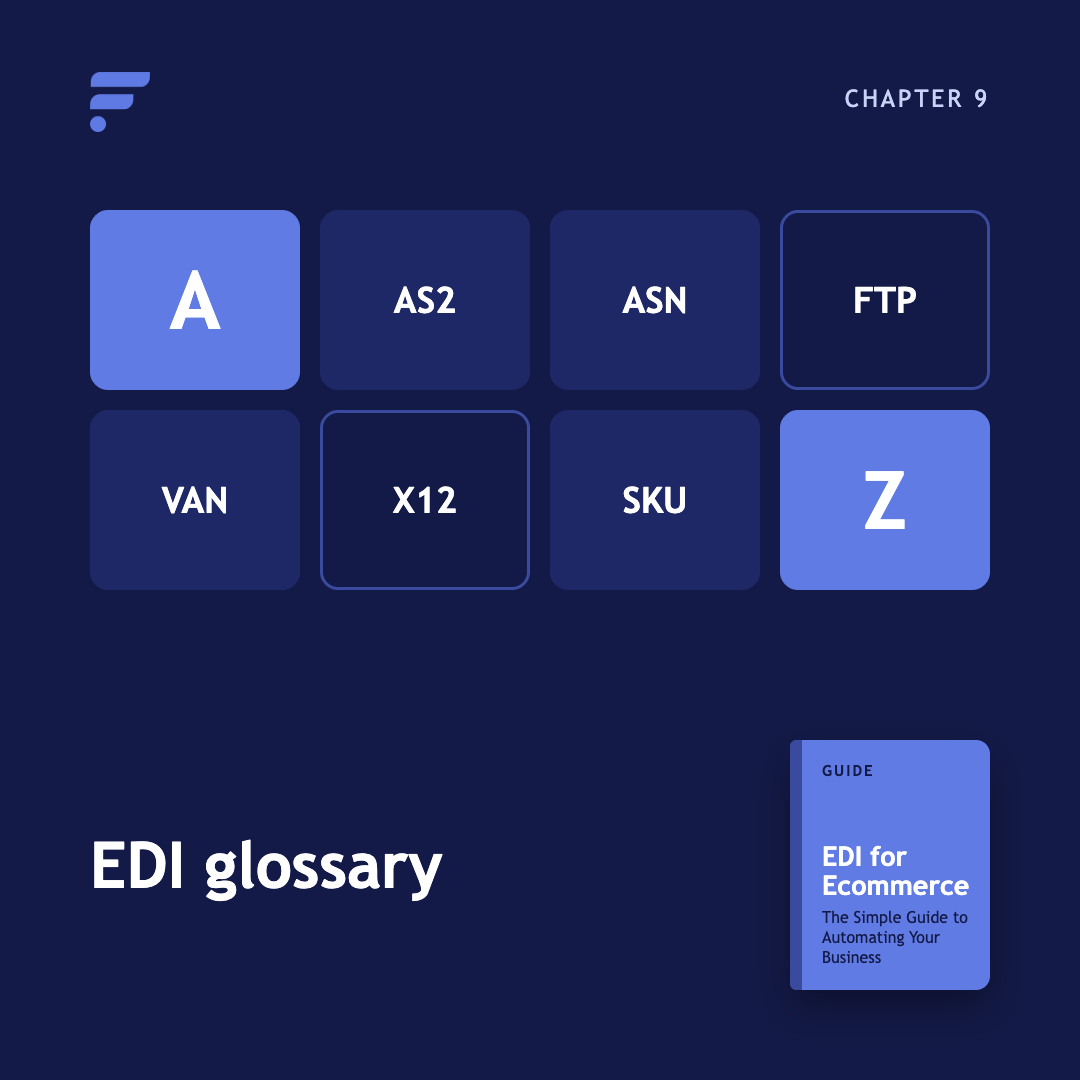
Chapter 9 EDI Glossary: The Terms You Will Actually Meet in Ecommerce

This glossary covers the EDI terms an ecommerce or operations team meets while evaluating, implementing, or running a trading partner connection. We have left out historical networking terminology that no longer appears in ecommerce EDI work, so that the definitions you need are not buried among ones you do not.

09-edi-glossary

Core concepts

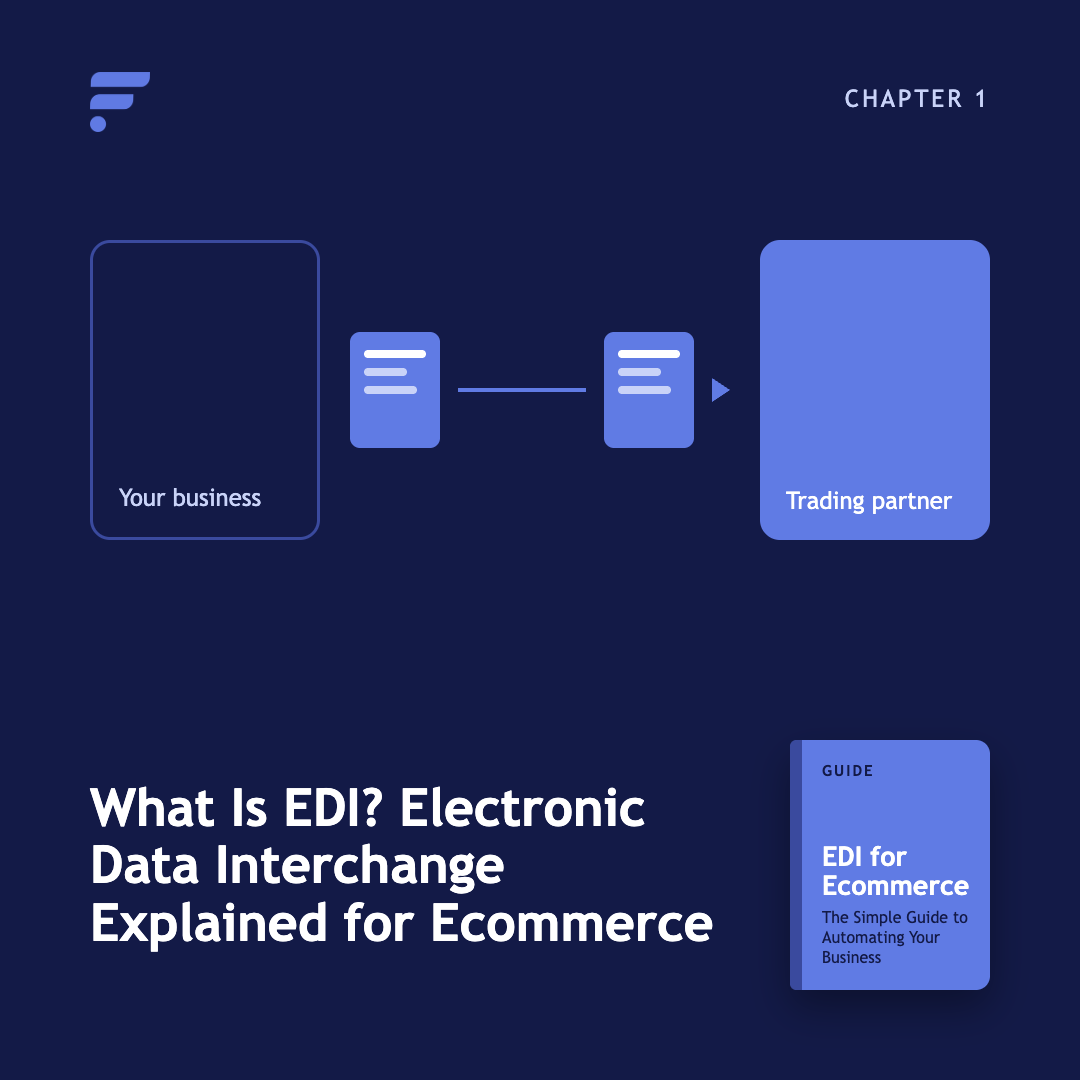
EDI (Electronic Data Interchange) The structured, system-to-system exchange of business documents between trading partners, in a format both sides have agreed on in advance.

Trading partner Any business you exchange EDI documents with: a supplier, distributor, retailer, manufacturer, or logistics provider.

Trading Partner Agreement The document that defines how two organizations exchange electronic documents, including which documents, which methods, and who is responsible for what.

Transaction set A single complete business document in EDI format, such as a purchase order or an invoice.

B2B integration The wider practice of connecting business systems between organizations. EDI is one method within it, alongside APIs and file transfers.

Transaction codes

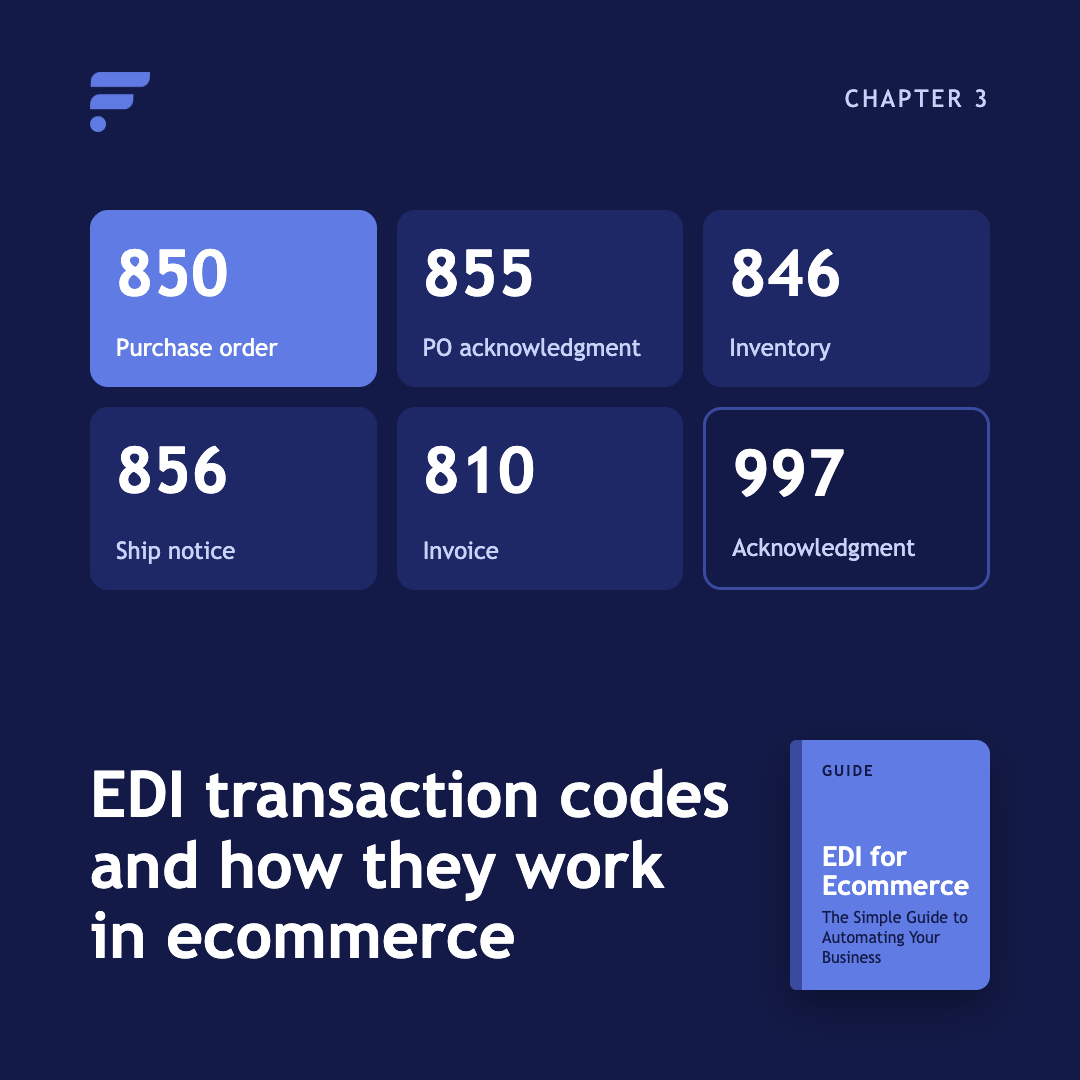
846 Inventory Advice Communicates supplier stock availability. In ecommerce it is usually the highest-frequency document, because channel listings depend on it.

850 Purchase Order The order itself, sent from buyer to supplier. It assigns the purchase order number that every later document in the chain must reference.

855 Purchase Order Acknowledgement The supplier's line-by-line response to a purchase order, confirming what will actually ship, what changed, and what was rejected.

856 Advance Ship Notice (ASN) Communicates shipment details including carrier and tracking number. Also called a ship confirm. In EDI, ASN always means Advance Ship Notice.

810 Invoice The supplier's bill for a shipped order. It is not an acknowledgement, and it is normally only valid for items that have already shipped.

832 Price/Sales Catalog Carries product details and pricing rather than live stock levels. Used for catalog setup and price updates.

870 Order Status Report Reports the status of items on a purchase order. In Flxpoint it is used for item cancellations only.

997 Functional Acknowledgement Confirms that a file arrived and could be read. It does not confirm that the business content was correct or that anything was processed.

Standards and versions

EDI standard The rules defining how a business document is structured and interpreted.

ASC X12 The dominant EDI standard in North America, maintained by the Accredited Standards Committee.

EDIFACT The international EDI standard developed under the United Nations, common in cross-border trade.

VICS A retail-oriented set of X12 conventions. Our preferred inbound version is 004010VICS.

Version The specific release of a standard a partner requires. Two partners on different versions of the same standard still need separate handling.

File structure

Interchange A complete EDI transmission, wrapped in control structure that identifies sender, receiver, and control numbers.

Envelope The control structure around the documents in a transmission, carrying the routing and identification information.

Functional group A set of transaction sets of the same type bundled inside one interchange.

Segment A logical group of related data elements inside a document, such as an address or a line item.

Data element A single unit of information within a segment, such as a quantity or a date.

Qualifier A code that gives meaning to the element next to it, for example identifying whether a number is a UPC or a SKU.

Delimiter The characters separating segments and elements in a file. Our defaults are a tilde, an asterisk, and a greater-than sign.

Control number An identifier assigned to a transmission, group, or transaction set. Header and trailer control numbers must match, and a mismatch is a common cause of structural rejection.

Implied decimal A convention where decimal points are omitted and assumed. On an invoice total, twelve dollars is written as 1200.

Connections and protocols

SFTP Secure File Transfer Protocol, a method of transferring files over an encrypted SSH connection. Flxpoint EDI connections run over SFTP.

AS2 Applicability Statement 2, a protocol for exchanging documents securely over HTTP. Widely used in enterprise EDI, and not supported by Flxpoint EDI.

VAN (Value-Added Network) A third-party network service that routes EDI documents between partners and provides mailboxing and tracking.

Inbound and outbound directories The file locations where each side deposits and collects documents. In our setup, suppliers place files in an inbound directory and collect ours from an outbound directory.

Implementation terms

Implementation guide A trading partner's technical specification: required documents, segments, elements, qualifiers, connection method, and testing process. It is the authority for that relationship.

Data mapping Connecting fields in your system to the segments and elements a partner's document requires.

EDI translation Converting between your internal data format and the standardized EDI format.

Validation Checking a document against syntax rules, required fields, and partner rules before it is processed or sent.

Certification A partner's testing process that must be completed before production transactions are allowed.

Exception handling The process for identifying, investigating, correcting, and resending transactions that failed.

Order routing Deciding which fulfillment source or supplier should receive an order, based on defined business rules. It happens before the EDI document is generated.

Chargeback A financial penalty a trading partner applies when documents or shipments do not meet their requirements.

What should you do next?

For how these documents work together, read EDI transaction codes. For implementation, see how to set up EDI and the implementation checklist. Full segment-level specifications live in our EDI documentation.

Frequently asked questions

What does ASN stand for in EDI?
ASN stands for Advance Ship Notice, the X12 856 transaction. It communicates shipment contents, carrier, and tracking details. The same acronym means something different in networking, which causes regular confusion.

What is the difference between EDI 850 and EDI 810?
The 850 is the purchase order sent by the buyer. The 810 is the invoice sent by the supplier after shipment. They sit at opposite ends of the same transaction.

What does an EDI 997 do?
It confirms that a file was received and was structurally readable. It does not confirm that the content was correct or that anything downstream was processed.

What is EDI mapping?
Mapping connects the data in your systems to the fields, segments, and qualifiers a trading partner's document requires, so the same information means the same thing on both sides.

What is a qualifier in EDI?
A qualifier is a code that explains the element beside it. It is how a file distinguishes a UPC from a SKU, or a ship-to address from a bill-to address, when both are formatted identically.

All Chapters in This Guide

01-what-is-edi

Start with the fundamentals. Learn what Electronic Data Interchange is, how businesses exchange structured documents electronically, and where EDI fits into ecommerce operations.
02-how-edi-helps

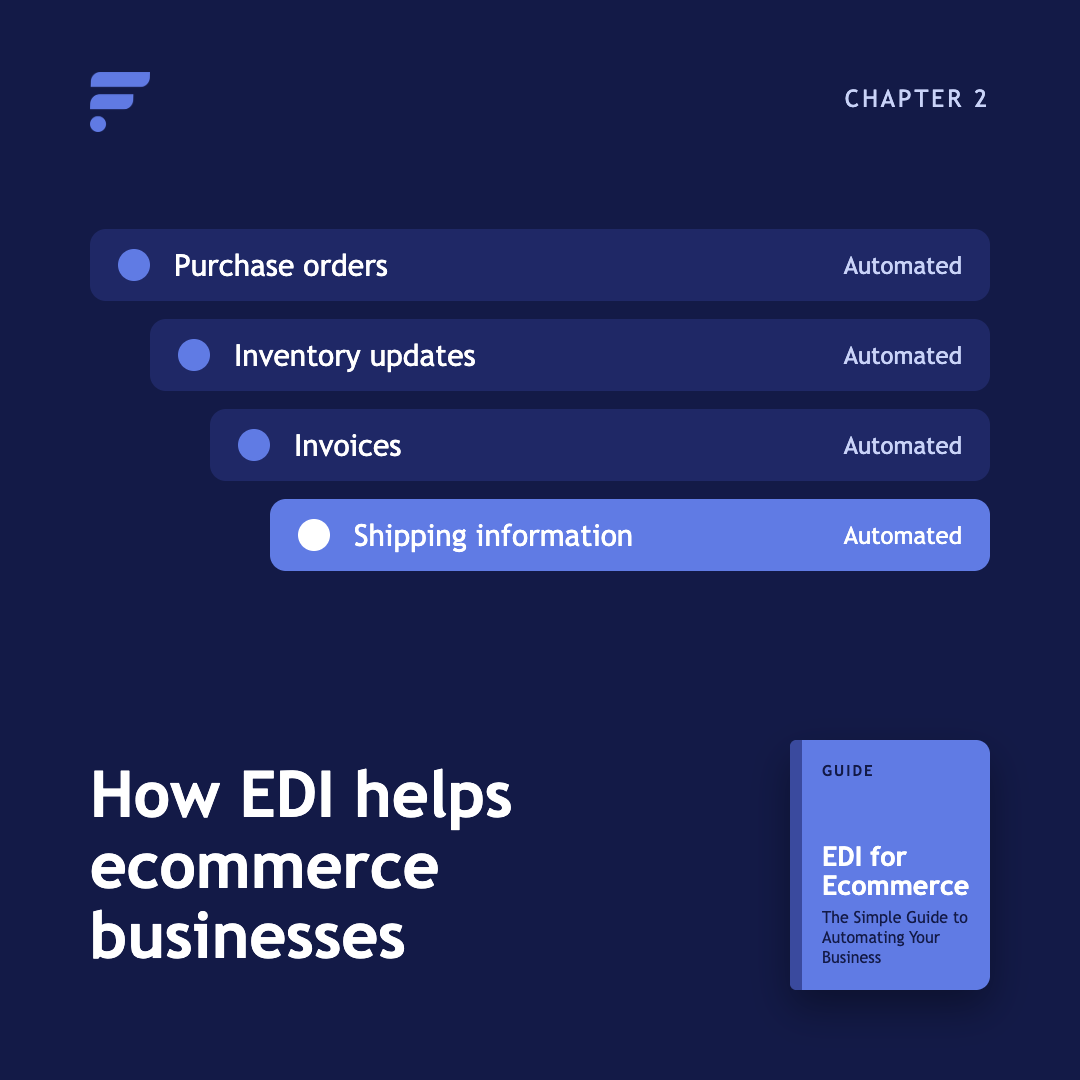
See how EDI can support purchase orders, inventory updates, invoices, shipping information, and other recurring ecommerce workflows.
Chapter 3. EDI transaction codes and how they work in ecommerce

Explore practical ways ecommerce businesses use EDI codes, including automated ordering, inventory synchronization, fulfillment workflows, and supplier communication.
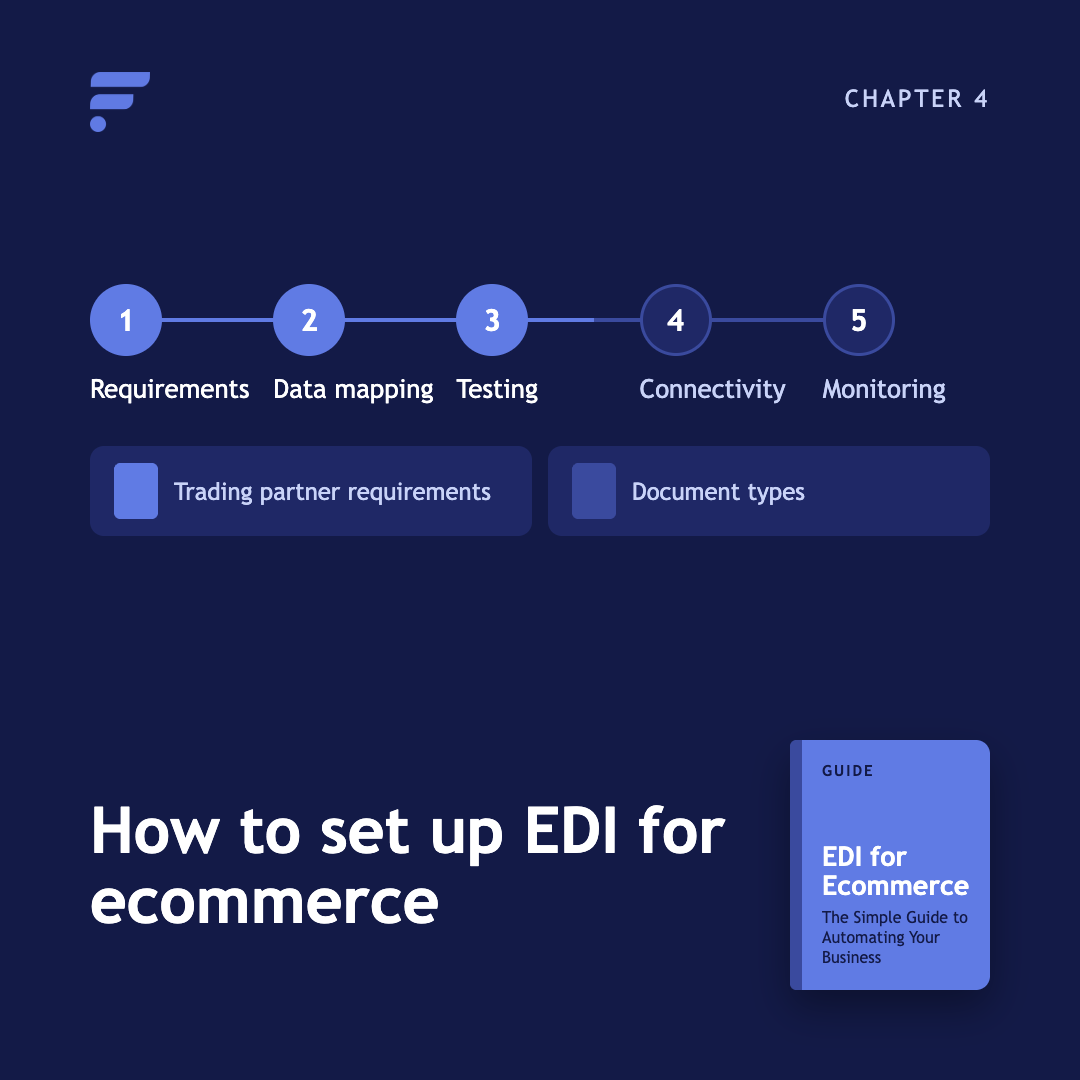
04-how-to-set-up-edi

Learn what you need before implementation, from trading partner requirements and document types to data mapping, testing, connectivity, and ongoing monitoring.
05-edi-vs-manual

Compare automated EDI workflows with manual processes such as spreadsheets, email, and data entry. Understand where automation can reduce repetitive work and improve consistency.
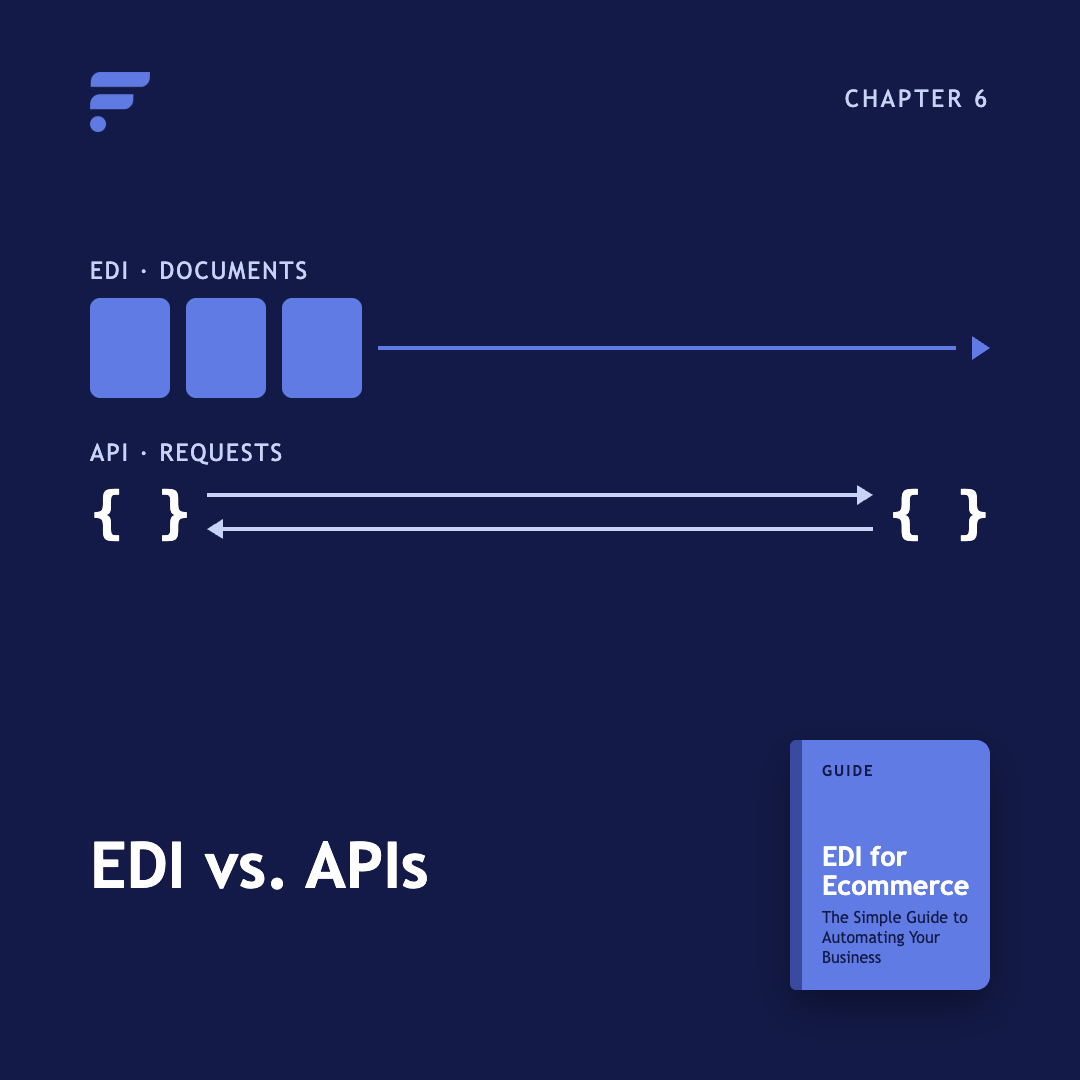
06-edi-vs-apis

EDI and APIs solve different connectivity problems. This chapter explains how they differ, where each works best, and why ecommerce businesses may use both.
07-future-of-edi

Explore how cloud systems, automation, connected platforms, and changing ecommerce requirements are shaping the role of EDI.
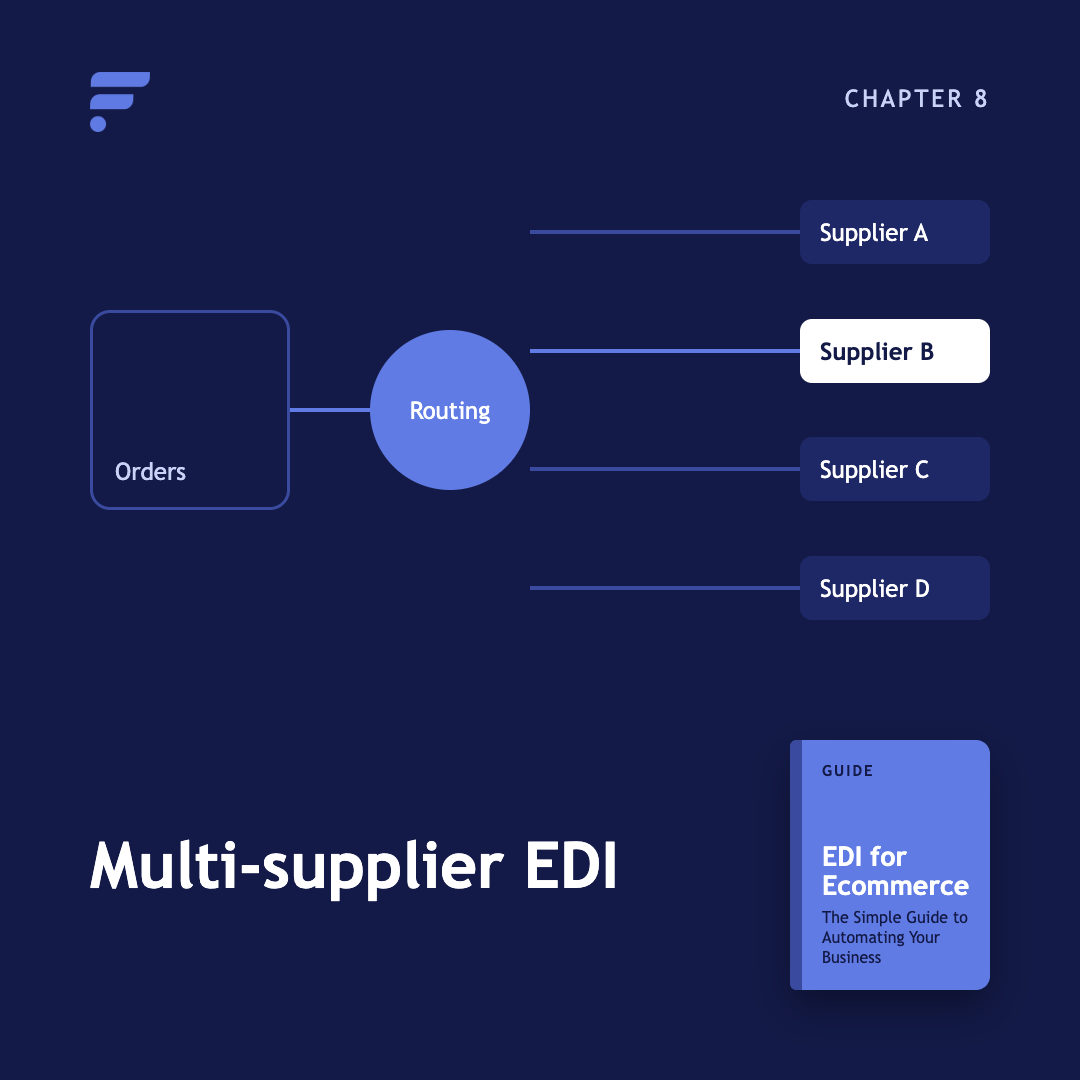
08-multi-supplier-edi

What happens when you run EDI across many suppliers at once, and why order routing matters more than the transaction itself. Learn how EDI fits into a broader multi-supplier ecommerce operation.
09-edi-glossary

New to EDI terminology? Use this glossary to quickly understand common terms, documents, standards, protocols, and concepts.
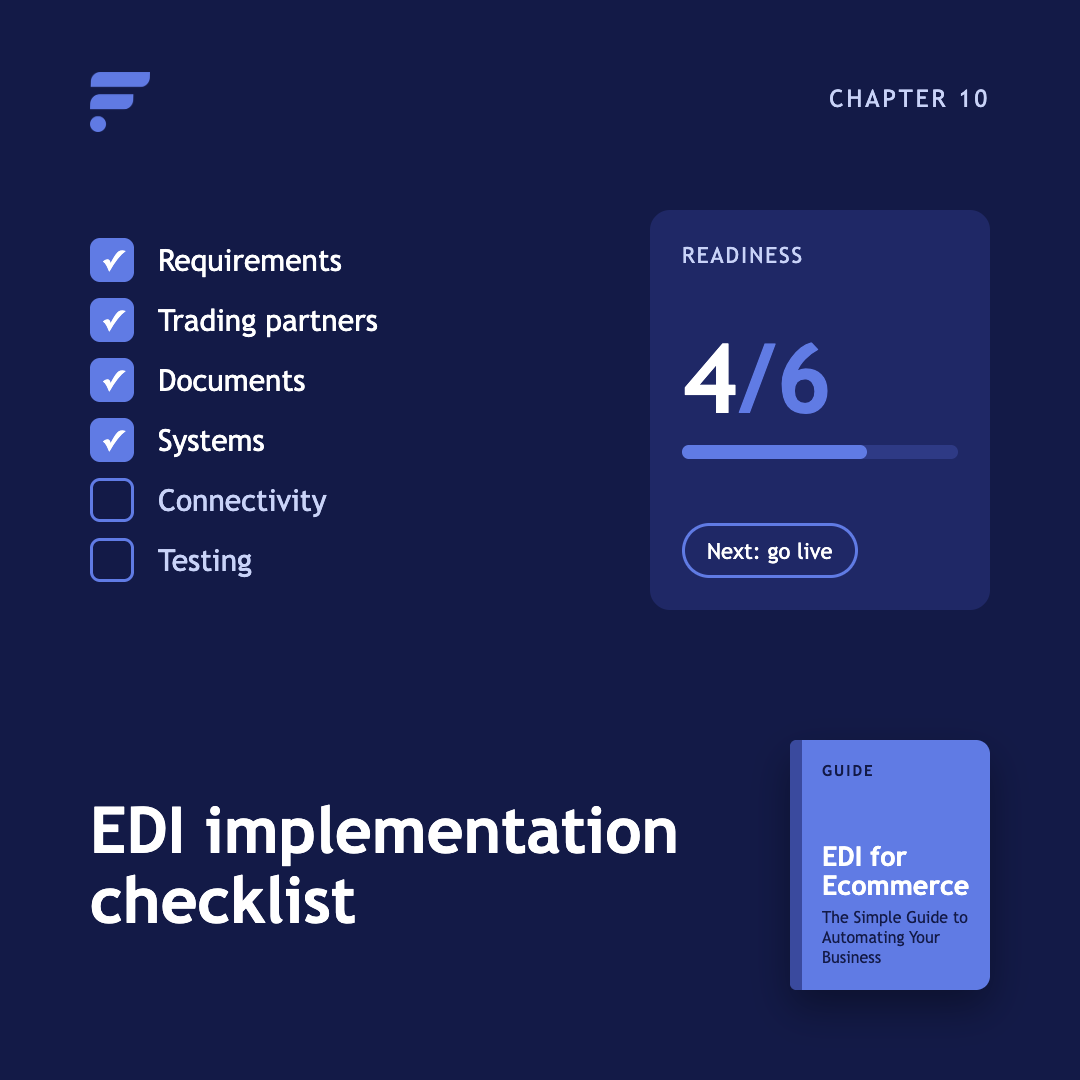
10-implementation-checklist

Before you begin an EDI implementation, make sure you've identified your requirements, trading partners, documents, systems, connectivity requirements, and testing needs.

Style Meets Efficiency

Kenneth Cole's Smart Savings With Shopify EDI Connections 

"They had never used Flxpoint before. But working with [the Flxpoint] team, they learned it and we're about to onboard our newest footwear partner, and you know that's big business for us.”

Mitul PatelKenneth Cole

KC_with shading
90%
reduction in costs by moving to Flxpoint
Supply Chain Reload

How Flxpoint Helped Rifle Supply Automate & Grow

“I went line by line… whatever the inventory number was and cost value was, I calculated it and was blown away by how much that was worth— $300 million worth of product that I added to our web store.”

Chris MekdaraRifle Supply
Rifle Supply Case Study Featured Image
$300M
additional product value added
From Idea to Impact

The Ecommerce Automation Behind Screen Skinz

"Automation is the key to maximizing your volume. [Flxpoint] comes right into our flow — everything's automated. We want it to be quick and efficient. So that's what we love about Flxpoint."

Shaun Brown & Clay CanningScreenSkinz

ScreenSkinz Case Study Featured Image
95%
time saved on manual tasks
Inventory Made Easy

How Inhaven Transformed Vendor Management with Flxpoint

"We ended up switching to Flxpoint, and it has been a much smoother process. Where it took us six months to get onboarded with the other company, we were up and running in a week or two with Flxpoint."

Ashley ChingInhaven

Inhaven_with shading
96%
faster onboarding time
Powering Performance in Automotive

How Black Patch Performance Scaled Smarter with Flxpoint

"The only way to actually scale was to go through Flxpoint… You can’t even come close to hiring someone to do what Flxpoint does for the price."

Jonathan WilliamsBlack Patch Performance

Black patch performance_with shading
550K
SKUs managed effortlessly