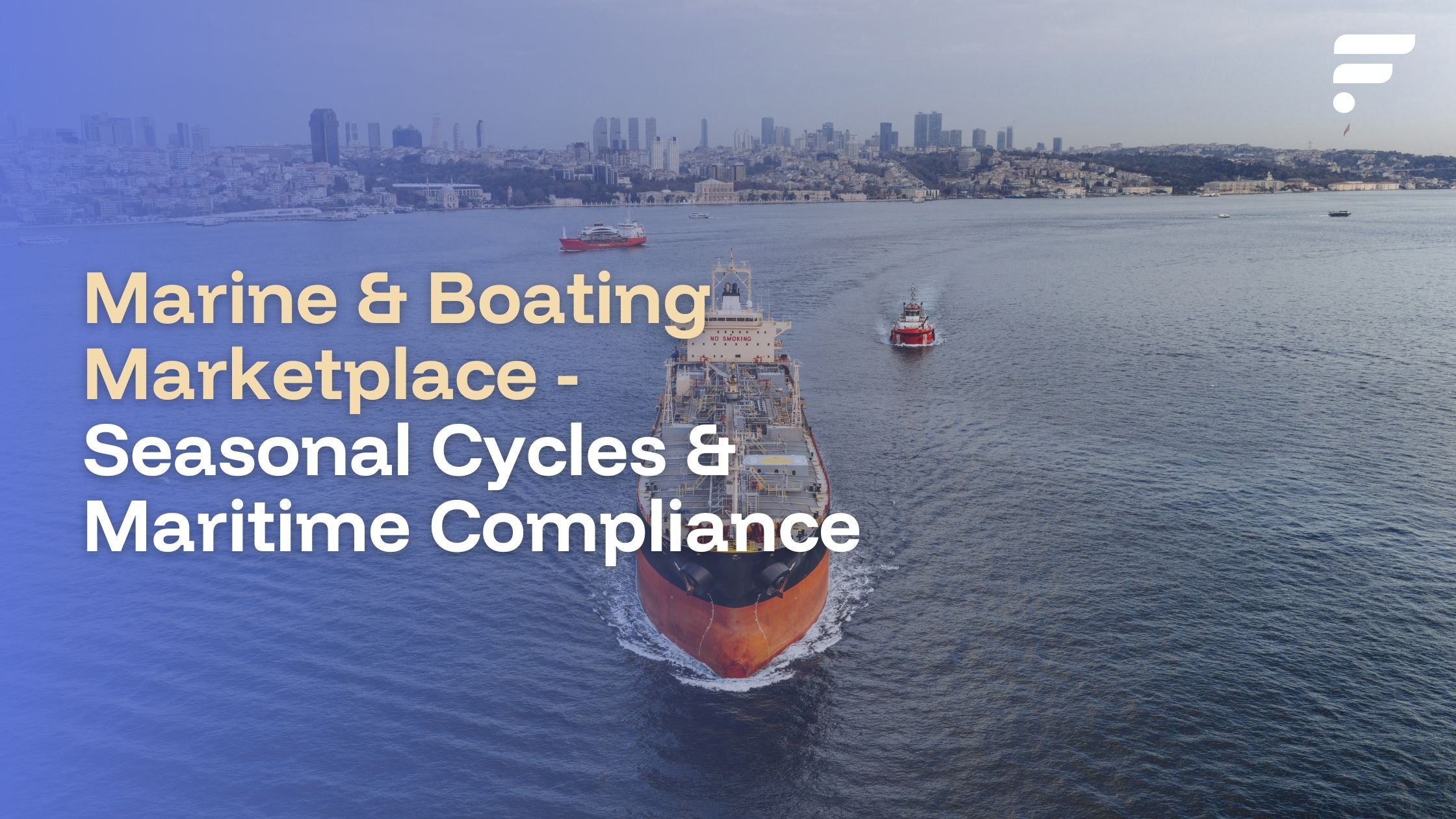
Navigating the Complex Dynamics of Marine Marketplaces
The marine and boating industry operates within highly variable seasonal demand and strict regulatory environments. Managing supply chains across manufacturers, boat dealers, and service providers requires precision in coordination and compliance. A multi vendor marketplace framework enables synchronized operations by integrating inventory visibility, vendor management, and logistics for diverse maritime stakeholders.
In a boats marketplace, digital automation supports data consistency across vessel types, parts, and maintenance workflows. Maritime compliance remains a critical factor, covering safety certifications, environmental standards, and coastal delivery regulations. Seasonal business cycles—ranging from off-season storage to peak operational demand—further define marketplace efficiency and profitability in this complex ecosystem.
Marine Regulatory Framework and Certification Coordination
Marine and boating marketplaces must maintain strict adherence to maritime safety and quality standards. Coordinating compliance across vendors ensures product integrity, operational safety, and global regulatory acceptance in a multi vendor marketplace.
Adhering to Maritime Safety Standards
Compliance with Coast Guard, IMO, and marine-grade safety standards ensures that vessels, parts, and accessories meet regulatory benchmarks for performance and reliability. In a marketplace boats environment, adherence minimizes legal risks, enhances consumer confidence, and supports global trade eligibility.
These standards regulate areas like life-saving equipment, emissions, and material durability under harsh marine conditions. Consistent enforcement across all vendors maintains uniform safety, especially when coordinating international suppliers through a multi vendor marketplace structure.
Compliance Verification and Market Access
- Compliance verification ensures that every marine component and vessel meets operational and legal standards before sale or deployment.
- It authenticates documentation for Coast Guard and IMO conformity during inspection or licensing.
- Enables boats marketplace operators to validate vendor compliance before product listing, preventing non-compliant inventory.
- Strengthens buyer trust by guaranteeing traceable, inspected, and approved marine products.
- Facilitates smoother customs clearance and cross-border trade for certified goods.
- Supports insurance eligibility by proving adherence to verified maritime safety regulations.
- Reduces liability exposure in case of accidents or warranty disputes related to non-certified products.
Managing Marine and Electrical Certifications
- ISO 9001 Certification - Ensures quality management in marine manufacturing, covering design consistency, component durability, and process control. Vendors with ISO certification demonstrate reliable production and traceability across supply chains.
- Electrical Compliance - Addresses marine-grade wiring, waterproofing, grounding, and electromagnetic compatibility (EMC) for onboard systems. It guarantees safety under saltwater exposure and vibration conditions.
- Integration with Multi Vendor Marketplace - Enables automated tracking of vendor certifications, expiry alerts, and compliance reports within centralized dashboards.
- Vendor Validation - Ensures only certified manufacturers and dealers can list products, enhancing safety assurance in a boats marketplace ecosystem.
- Audit Readiness - Maintains digital certification archives for regulatory audits and international inspections.
- Product Labeling Coordination - Aligns with CE and UL marks for cross-border sale eligibility.
- Risk Reduction - Prevents operational delays or fines resulting from expired or missing certification documents across global marine supplier networks.
Boat Compatibility and Identification Tracking Systems
Efficient compatibility management in a multi vendor marketplace ensures product accuracy and operational integrity. Advanced tracking systems, including hull identification numbers and structured databases, enable seamless coordination across the marketplace boats ecosystem.
Hull Identification Numbers and Traceability
Hull Identification Numbers (HIN) are essential for precise boat-model verification and lifecycle tracking. Each HIN encodes details about the manufacturer, production date, and model type. In a boats marketplace, this ensures accurate part matching, recall management, and compliance with marine safety standards.
HIN integration supports automated traceability across vendor networks, helping operators confirm part compatibility and prevent misidentified listings. This standardization strengthens quality assurance and vendor accountability within complex marine supply chains.
Compatibility Databases for Vendor Listings
- Centralized compatibility databases map each boat model to approved parts, engines, and accessories.
- Automated validation tools in the marketplace boats platforms that detect mismatched components before publishing vendor listings.
- Structured metadata enhances catalog accuracy and reduces manual input errors across multiple vendors.
- Integrated version control maintains consistency when manufacturers update model specifications.
- Data synchronization with supplier systems ensures up-to-date component availability and configuration standards.
- API-driven architecture allows real-time communication between dealer, manufacturer, and marketplace systems.
Accuracy in Fitment and Specifications
- Compatibility matrices ensure correct fitment of accessories, propellers, and engine units across diverse boat models.
- Automated verification tools detect discrepancies in part dimensions, mounting systems, and electrical interfaces.
- Engine type alignment features validate fuel compatibility, horsepower ratings, and emission compliance.
- Standardized product taxonomy simplifies filtering for vendors in a multi vendor marketplace, improving customer experience.
- Smart tagging of marine parts ensures interoperability across regional vendor databases.
- Continuous synchronization with OEM data enables dynamic updates to specifications as models evolve.
- Error-free fitment verification reduces return rates, warranty claims, and operational inefficiencies in the boats marketplace.
Seasonal Cycles and Inventory Optimization in Marine Operations
Seasonal demand in the marine and boating industry requires precise inventory planning. Effective coordination ensures product availability, freshness, and profitability across the fluctuating sales cycles of a multi vendor marketplace.
Understanding seasonal sales trends from winterization to peak boating months
- The marine industry experiences distinct cycles — off-season winter storage, spring preparation, and peak summer activity.
- Consumer demand rises sharply during boating months, requiring proactive supplier coordination.
- Vendors in a boats marketplace must align procurement and fulfillment with regional weather patterns and boating events.
- Data from previous seasons supports forecasting accuracy, preventing both understocking and excess inventory.
Inventory turnover management to align with seasonal fluctuations
- Seasonal turnover depends on proper SKU rotation and supplier lead-time management.
- Automated replenishment systems monitor sell-through rates and trigger restocks based on predictive analytics.
- Overstock during off-season increases holding costs and risk of product obsolescence, especially for marine electronics and perishable maintenance supplies.
- FIFO (First-In, First-Out) protocols help manage expiration-sensitive materials such as marine coatings and batteries.
- In a multi vendor marketplace, centralized visibility ensures consistency across all supplier warehouses and fulfillment centers.
Leveraging automation in a multi vendor marketplace to synchronize stock levels across regional suppliers
- Automation connects regional distributors, marina operators, and manufacturers through real-time data synchronization.
- It enables dynamic inventory balancing, where stock from low-demand regions is redistributed to high-demand coastal markets.
- AI-driven forecasting tools optimize seasonal procurement by analyzing weather data, boating permits, and event schedules.
- Automated alerts prevent out-of-stock scenarios for high-demand items such as life jackets, anchors, and marine electronics.
- Within marketplace boats systems, automation reduces manual errors and supports transparent vendor communication.
- Integration with ERP and logistics systems enhances responsiveness during peak boating months.
- This connected approach improves supply chain agility, ensuring operational efficiency and consistent consumer availability across diverse maritime regions.
Maritime Logistics and Specialized Delivery Coordination
Efficient maritime logistics in a multi vendor marketplace requires precise coordination of dockside deliveries, marine transport, and specialized handling to ensure safe, timely, and compliant distribution of vessels and marine equipment.
- Dockside and Marina-Based Delivery Integration
- Coordination between vendors, marina operators, and delivery agents ensures accurate drop-off points for large or sensitive marine products.
- Dockside logistics software helps synchronize delivery schedules based on vessel accessibility, tide conditions, and marina storage availability.
- Integration with marketplace boats systems allows automated updates to vendors and customers regarding estimated delivery times and handling requirements.
- Specialized Packaging and Transport Management
- Marine products such as engines, hull fittings, and navigation systems require water-resistant, shock-proof packaging to maintain integrity during transit.
- Temperature-sensitive items, such as marine electronics and lubricants, demand climate-controlled transport.
- Automated coordination within a multi vendor marketplace helps allocate carriers based on cargo size, type, and environmental sensitivity.
- Oversized Freight and Vessel Transport Coordination
- Large boat deliveries often require coordination with specialized haulers and permit management for oversized loads.
- Automated documentation management streamlines customs clearance for cross-border shipping of vessels or high-value marine components.
- Integration with regional marine freight networks improves delivery reliability and reduces idle dock time.
- Last-Mile and Waterfront Delivery Accuracy
- GPS-enabled delivery systems ensure precision in waterfront or coastal deliveries.
- Integration with boats marketplace platforms enables real-time tracking and confirmation of successful dock deliveries.
- AI-driven route optimization improves fuel efficiency and reduces transit time for both land and sea routes.
- Maintenance and Reverse Logistics Coordination
- Coordination systems manage the return or exchange of defective or expired marine products.
- Reverse logistics workflows ensure proper handling of contaminated or recyclable marine components in compliance with maritime safety standards.
- Vendor performance metrics within the multi vendor marketplace help identify reliable logistics partners for sustained operational excellence.
Environmental and Maritime Safety Compliance
Ensuring environmental and maritime safety is essential in a multi vendor marketplace that connects manufacturers, suppliers, and service providers. Compliance coordination protects marine ecosystems while sustaining operational efficiency.
EPA & MARPOL Coordination
Coordinating EPA and MARPOL compliance for antifouling paints, fuel systems, and emissions.
- Antifouling Paint Regulation - Vendors must align with EPA-approved biocide formulations and MARPOL Annex V rules to minimize toxic discharge from hull coatings into marine environments.
- Fuel System Standards - Marketplace operators ensure vendor compliance with MARPOL Annex VI emission limits, verifying sulfur content and fuel type documentation across all participating suppliers.
- Emission Monitoring - Automated data systems track CO₂ and NOx emission levels, enabling proactive adherence to international maritime emission control standards.
- Compliance Documentation - Integrated compliance dashboards within the boats marketplace maintain audit-ready reports for all certified marine components and materials.
Sustainability & Waste Management
Managing sustainability certifications and marine waste-handling protocols.
- Certification Alignment - Vendors must adhere to ISO 14001 and Blue Flag sustainability standards to ensure environmentally responsible production and logistics.
- Waste Segregation - Defined workflows for hazardous and non-hazardous marine waste ensure MARPOL Annex IV and V compliance during collection and disposal.
- Recycling Coordination - Marketplace systems enable traceable recycling of oils, batteries, and electronic components used in marine equipment.
- Digital Recordkeeping - Automated documentation tools within the multi vendor marketplace maintain certification validity and waste-handling logs for ongoing verification.
Vendor Compliance Tracking
Tracking environmentally compliant vendors across a distributed marine supplier network.
In a large boats marketplace, automated monitoring tools validate vendor sustainability credentials, emission certifications, and disposal records.
The multi vendor marketplace platform integrates environmental compliance scoring, enabling operators to assess vendor reliability and maintain transparent supply chains. These systems ensure consistent enforcement of maritime environmental standards across global suppliers while reducing manual oversight requirements.
Vendor Network Integration and Marine Service Coordination
Efficient vendor integration is vital for maintaining service quality and operational accuracy in a multi vendor marketplace for marine and boating operations. It ensures seamless collaboration between mechanics, marinas, and repair professionals.
Marine Service Integration
Integration of marine mechanics, boat repair services, and marina partners into the boats marketplace ecosystem
- Centralized vendor integration connects marine mechanics, dock repair providers, and marina operators under a unified boats marketplace framework, ensuring consistent service availability and standardized quality controls.
- Structured vendor onboarding protocols define service categories, labor specialization, and warranty coverage, enabling accurate matchmaking between customer needs and verified marine professionals.
- The multi vendor marketplace system manages availability synchronization across marinas, ensuring seasonal demand alignment and preventing service overlaps during peak boating months.
- Unified digital dashboards streamline vendor communication, allowing real-time coordination for equipment maintenance, part replacements, and dockside inspections.
- Integration supports scalable operations by maintaining service traceability, enabling operators to monitor vendor performance through automated compliance and maintenance logs.
Automated Scheduling and Verification
Automating service scheduling and maintenance verification
- Automated scheduling modules assign maintenance tasks to qualified service vendors based on location, specialization, and vessel compatibility data within the marketplace boats ecosystem.
- Maintenance verification workflows track service completion, document part replacements, and update inspection histories automatically, ensuring traceable and auditable maintenance records across vendor networks.
Professional Certification Validation
Ensuring professional certification validation for marine service providers
Certification verification ensures that all marine technicians and service partners listed in the multi vendor marketplace meet maritime regulatory and technical competency standards. The platform automates credential validation through integrated compliance databases, confirming active certifications for electrical, mechanical, and safety specializations.
This verification process maintains service reliability, reduces regulatory exposure, and strengthens vendor accountability within the boats marketplace ecosystem.
International Trade and Cross-Border Marine Regulations
Global marine trade requires precise compliance with international shipping laws, product safety standards, and import-export documentation to ensure seamless cross-border transactions across a multi vendor marketplace in the boating industry.
International Maritime Law Compliance:
- Adherence to IMO (International Maritime Organization) regulations ensures vessels, engines, and marine electronics meet global safety and pollution prevention standards.
- Marketplace operators must verify vendor certifications for all imported or exported marine components.
Import and Export Documentation Control:
- Each product shipment in a multi vendor marketplace must include proper customs documentation, such as HS codes, certificates of origin, and compliance declarations.
- Automated systems reduce human error in export labeling and trade documentation submission.
Country-Specific Marine Product Regulations:
- Different regions enforce varying rules for emissions, coatings, and electrical systems in marine vessels.
- The marketplace boats ecosystem must validate compliance against both domestic Coast Guard and international trade standards.
Controlled Equipment Classification and Certification:
- Medical, navigation, and electronic marine devices may require additional export licenses.
- Vendors should maintain records of CE, FCC, or ISO certification for international sales approval.
Customs Clearance and Tariff Management:
- Automated workflows enable synchronization of customs clearance data and tariff updates.
- Integration with digital trade compliance platforms supports real-time tariff adjustments for global shipping.
Cross-Border Logistics Coordination:
- Coordination with freight forwarders, marine carriers, and local customs agencies ensures accurate and timely delivery.
- The boats marketplace must support digital tracking and verification at every customs checkpoint.
Data Governance and Trade Transparency:
- Blockchain or secure API frameworks can be used to track the origin, ownership, and condition of marine equipment.
- Transparent documentation builds trust and simplifies dispute resolution in international transactions.
Risk Mitigation through Automation:
- Automated compliance validation prevents costly trade delays and fines.
- Scalable systems in a multi vendor marketplace enhance efficiency across global marine trade operations.
Technology-Driven Efficiency - Automation and Forecasting Tools
Automation and data-driven forecasting strengthen the operational backbone of a multi vendor marketplace by enabling real-time synchronization, regulatory precision, and predictive planning within dynamic marine and boating environments.
- Automated Compliance Coordination - Automation ensures continuous monitoring of maritime certifications, vessel documentation, and environmental regulations across all vendors in the multi vendor marketplace, reducing manual oversight and compliance gaps.
- Inventory Synchronization - Real-time data integration connects suppliers, marinas, and distributors within the boats marketplace, maintaining accurate stock visibility and preventing seasonal overstocking or shortages of marine parts and equipment.
- Demand Forecasting Models - Predictive analytics leverage historical sales and seasonal weather trends to forecast demand for boating accessories, safety gear, and maintenance supplies, optimizing stock levels across multiple vendors.
- Lifecycle and Warranty Tracking - Automated tracking systems record warranty periods and product lifecycles, ensuring timely replacements and maintenance reminders, improving customer satisfaction and vendor accountability.
- Vendor Network Optimization - Workflow automation enhances coordination between boat manufacturers, dealers, and marine service providers in the marketplace boats ecosystem, streamlining transactions and order fulfillment.
- Operational Scalability - Integrated forecasting tools support long-term scalability, enabling marine marketplace operators to manage growing vendor networks while maintaining compliance accuracy, logistical efficiency, and profitability across seasonal fluctuations.
Enabling Sustainable Maritime Operations through Scalable Automation
Automation aligns maritime operations with compliance precision and seasonal flexibility. In a multi vendor marketplace, it supports synchronized inventory cycles, vendor accountability, and consistent product traceability. Automated monitoring ensures adherence to marine-grade standards, safety certifications, and regulatory updates across distributed vendor networks.
Integrated compliance systems strengthen vendor reliability by maintaining accurate data on certifications, warranty management, and environmental adherence. For marketplace boats platforms, these systems minimize operational delays and ensure consistent fulfillment across diverse product categories. The boats marketplace ecosystem benefits from real-time synchronization of stock, documentation, and delivery coordination.
By integrating automation with compliance frameworks, marine operators sustain performance through fluctuating seasonal demand while maintaining transparency, safety, and regulatory consistency across all participating vendors.