Table of Contents
- Introduction
- Understanding 3PL Ecommerce Integration
- Why 3PL Integration Matters
- Core Components of Your Ecommerce Stack
- How Flxpoint Connects 3PLs to Your Stack
- Overcoming Common Integration Challenges
- How Flxpoint Helps You Integrate, Automate, and Scale With 3PLs
- Conclusion
Introduction
Managing fulfillment across multiple 3PLs, warehouses, and sales channels can feel like juggling flaming torches while riding a unicycle. Orders pile up, inventory counts drift out of sync, and tracking numbers disappear into the void. Sound familiar?
3PL dropshipping doesn't have to be chaotic. When your third-party logistics partners connect smoothly with your Warehouse Management System (WMS), Order Management System (OMS), and marketplace feeds, fulfillment becomes a well-oiled machine. This blog unpacks how to integrate 3PLs with your ecommerce stack using Flxpoint, so you can focus on growth instead of manual work.
Understanding 3PL Ecommerce Integration
3PL dropshipping integration is the bridge that connects your logistics providers to the systems running your business. Instead of manually emailing suppliers or uploading spreadsheets, integration automates the flow of orders, inventory updates, and shipment tracking between your 3PLs and sales channels.
Your OMS receives an order from Shopify, your routing logic picks the optimal 3PL based on cost and location, and the fulfillment request fires off automatically. The 3PL ships the product, sends back tracking info, and your customer gets an update; all without you lifting a finger. That's 3PL automation at work.
Why 3PL Integration Matters
According to industry insights, businesses using automated fulfillment systems reduce order processing time and improve accuracy. When your 3PL integrates with your WMS and OMS, you gain:
- Real-time inventory visibility – No more overselling or stock discrepancies.
- Faster order routing – Orders reach the right 3PL based on location, cost, or availability.
- Seamless tracking updates – Customers get shipment notifications without manual data entry.
- Scalability – Add new 3PLs or sales channels without rebuilding workflows from scratch.
Integration transforms fulfillment from a bottleneck into a competitive advantage.
Core Components of Your Ecommerce Stack
Warehouse Management System (WMS)
Your WMS tracks inventory inside warehouses, manages stock levels, and coordinates picking, packing, and shipping. When integrated with Flxpoint, your WMS syncs inventory updates to all connected sales channels, ensuring accurate stock counts.
Order Management System (OMS)
The OMS is mission control for orders. It imports orders from sales channels, routes them to fulfillment sources, and tracks their progress. Flxpoint acts as a centralized OMS, connecting channels like Amazon, Shopify, and BigCommerce to multiple 3PLs.
Dropship Marketplace Feeds
Marketplace feeds push product listings, pricing, and inventory to platforms like Walmart, eBay, or Amazon. Flxpoint syncs these feeds automatically, so updates from your 3PL reflect across all channels without manual intervention.
How Flxpoint Connects 3PLs to Your Stack
Flxpoint serves as the hub that ties your 3PL dropshipping stack together. Here's how it works:
- Connect Your 3PLs as Sources – Flxpoint integrates with 3PLs via API, EDI, FTP, or CSV uploads. You can connect providers like FedEx, Amazon FBA, or custom warehouses.
- Sync Inventory Automatically – The Get Inventory Primary integration pulls stock levels from your 3PLs. Flxpoint aggregates quantities across sources and pushes updates to your sales channels.
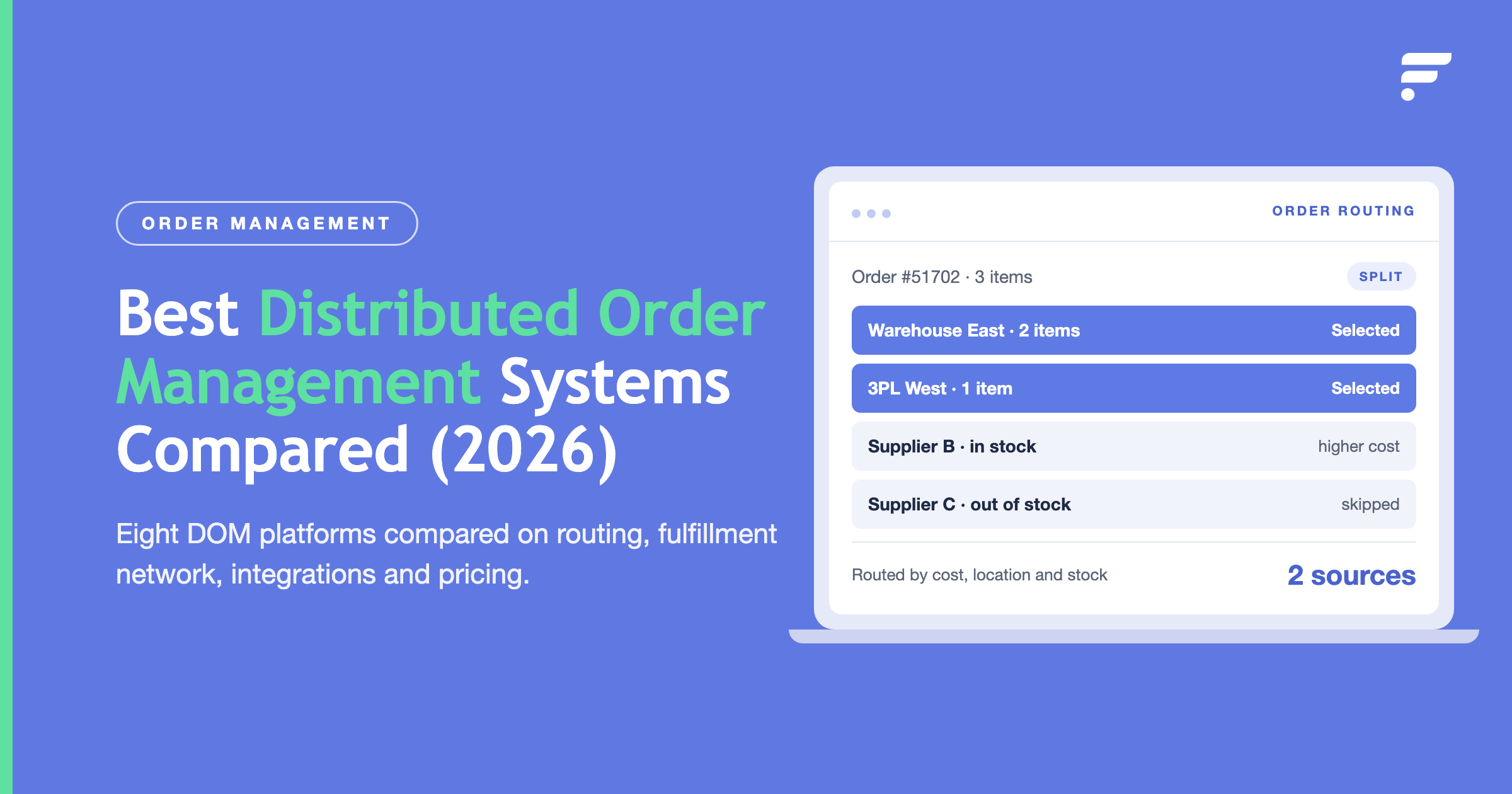
- Route Orders Intelligently – When an order comes in, Flxpoint's routing logic evaluates cost, location, and inventory availability to pick the best 3PL. Fulfillment requests generate automatically.
- Track Shipments in Real Time – The Get Shipments integration imports tracking numbers from 3PLs. Flxpoint syncs this data back to your sales channels, keeping customers informed.
This setup eliminates manual workflows and ensures your stack operates as a unified system.
Overcoming Common Integration Challenges (Rewritten for Your Audience)
Challenge 1: Inventory Feeds That Don’t Sync Fast Enough
Most retailers work with several 3PLs, each updating stock on a different schedule. When one updates every hour and another updates once a day, you end up with mismatched counts. This leads to overselling, cancelled orders, and unhappy customers.
Challenge 2: SKUs That Don’t Match Across Systems
Your channels use one SKU format, your 3PLs use another, and your suppliers may use something entirely different. When your team spends hours fixing mismatched SKUs or mapping files manually, fulfillment slows down and errors creep in.
Challenge 3: Tracking Updates That Arrive Late or Not at All
Customers expect frequent updates. Many 3PLs send tracking data through emails, spreadsheets, or delayed system exports. Missing or slow tracking creates support tickets and leaves your customer experience exposed.
Challenge 4: No Clear Logic for Which 3PL Should Fulfill the Order
When you rely on several fulfillment partners, deciding who handles each order becomes a guessing game. One 3PL may be closer, another may be cheaper, and another may have better margins. Without automation, your team ends up routing orders manually and losing valuable time.
How Flxpoint Helps You Integrate, Automate, and Scale With 3PLs
Flxpoint acts as the central engine that connects your 3PLs, sales channels, and backend operations. Instead of juggling separate tools, emails, and spreadsheets, everything flows through one platform built for mixed fulfillment and multi-source inventory.
Here’s how Flxpoint brings your entire fulfillment ecosystem together.
A Single Connection Point for All Your 3PLs
You can connect any 3PL dropshipping to Flxpoint through API, EDI, FTP, or flat-file feeds. Once added as a source, Flxpoint pulls product details, stock levels, and cost data through the Get Inventory Primary integration. It standardizes fields from any format, so even if one 3PL sends XML and another sends CSV, your data stays clean and consistent.
Flxpoint aggregates inventory across all 3PLs, calculates availability, and syncs updates to Shopify, Amazon, BigCommerce, Walmart, or any other connected channel. This removes the guesswork and prevents overselling.
Order Routing That Runs on Autopilot
When an order comes in, Flxpoint evaluates your routing rules; lowest cost, best margin, preferred source, or shipment location; and sends the order to the ideal 3PL without manual review.
After routing, Flxpoint automatically sends fulfillment requests to the selected 3PL using your chosen connection method. There’s no emailing purchase orders or copying data from one system to another. The moment the product ships, Flxpoint pulls tracking details with Get Shipments and syncs it back to your channels so your customers stay informed.
Automation That Reduces Errors and Speeds Up Fulfillment
By centralizing inventory syncs, routing logic, fulfillment requests, and tracking updates, Flxpoint removes the friction points that often slow down hybrid fulfillment workflows. Operations teams spend less time fixing mismatched SKUs, hunting for tracking numbers, or updating spreadsheets, and more time focusing on growth.
A Practical Look at This in Action
A dropship retailer working with three 3PL partners while selling across Shopify, Amazon, and niche marketplaces. Before using Flxpoint, the team spent hours emailing suppliers for availability, updating spreadsheets, and entering tracking numbers. Errors crept in, customers complained, and the team struggled to scale.
Once Flxpoint powered their stack:
-
Inventory synced hourly across all channels, reducing overselling.
-
Orders routed automatically to the most efficient 3PL.
-
Tracking information updated across channels within minutes.
-
Manual work dropped noticeably.
This is the difference between managing fulfillment and orchestrating it.
Conclusion
Integrating 3PLs with your ecommerce stack; WMS, OMS, and marketplace feeds; transforms fulfillment from a manual slog into an automated powerhouse. Flxpoint connects your logistics providers, sales channels, and systems, syncing inventory, routing orders, and tracking shipments without the chaos.
Whether you're managing one 3PL or ten, integration scales with your business. Start by connecting your first 3PL as a source, configure inventory and order workflows, and watch fulfillment run itself.
See how easy 3PL integration can be. Request a Flxpoint demo and start scaling without the manual work.