Table of Contents
- The Growing Role of 3PLs in Modern Fulfillment
- How 3PLs Enable Dropship and Hybrid Models
- The Tech Stack Behind 3PL Ecommerce Integration
- Critical Failure Points in 3PL Operations
- Why Hybrid Fulfillment Models Are Winning
- How Flxpoint Solves Common 3PL Challenges
The Growing Role of 3PLs in Modern Fulfillment
70% of 3PL business is now connected to ecommerce operations, reflecting how dramatically fulfillment has changed. The US market alone reached $246.25 billion in 2025, driven by merchants who need to ship faster, scale smarter, and manage inventory across multiple channels without drowning in operational complexity.
Businesses aren't choosing between 3PL dropshipping, warehousing, or in-house fulfillment anymore. They're blending all three. Your fastest-moving sneakers ship from a 3PL in Dallas.
Your limited-edition jackets dropship directly from the manufacturer. Your subscription boxes get kitted and customized at a specialized facility. This is hybrid dropshipping model fulfillment, and it's reshaping how 3PLs operate; along with where they struggle.
How 3PLs Enable Dropship and Hybrid Models
Strategic inventory distribution across fulfillment methods
Traditional 3PL dropshipping fulfillment gives you control: you buy inventory in bulk, ship it to their warehouse, and they handle everything from receiving to final delivery. You own the quality, the packaging, the customer experience.
Volume discounts kick in at 2,500 monthly orders, where pick-and-pack fees average $1.80 per item, dropping to $1.20 at 50,000-plus orders; a 33% reduction that makes scale economically attractive.
3PL Dropshipping flips the script. You never touch the product. Orders route directly to suppliers who ship to customers. No upfront inventory investment, no storage fees, no risk of unsold stock collecting dust. But you also surrender control over shipping speed, packaging quality, and customer experience consistency.
Hybrid models let you play both sides strategically:
- High-velocity core products flow through 3PL warehouses for guaranteed two-day shipping and quality control
- Slow-moving specialty items get dropshipped to avoid tying up capital in inventory that turns quarterly instead of weekly
- Bulky or oversized products ship direct from manufacturers, avoiding expensive dimensional weight charges
- New product testing happens via dropshipping before committing to bulk inventory purchases
One multichannel brand leveraging hybrid pricing and automation brought pick-and-pack costs under $1.10 at scale; proof that strategic fulfillment method allocation directly impacts your bottom line.
Multi-channel Automation workflow becomes possible
Selling on Amazon, Shopify, Walmart, and TikTok Shop simultaneously used to mean maintaining separate inventory pools for each channel. Hybrid fulfillment changes that equation.
Advanced 3PLs dropshipping now provides centralized inventory that serves all channels, with intelligent routing determining which fulfillment method handles each order based on real-time availability, customer location, and delivery speed requirements.
Amazon's Multi-Channel Fulfillment integration demonstrates this capability. Merchants use FBA inventory to fulfill Shopify orders, maintaining unified stock visibility while consolidating shipments.
The result? Fulfillment costs drop by up to 36% on multi-unit orders while customers get familiar Amazon tracking experiences regardless of where they placed the order.
The Tech Stack Behind 3PL Ecommerce Integration
Real-time inventory synchronization across fulfillment networks
The backbone of modern 3PL operations isn't warehouse space; it's the technology stack connecting everything. Warehouse Management Systems coordinate receiving, storage, picking, packing, and shipping while updating inventory across all connected platforms instantly. When a product moves through any stage, stock levels refresh across Amazon, Shopify, Walmart, and your DTC site within seconds.
Order Management Systems serve as the middleware layer, making split-second routing decisions: Should this order ship from the Chicago warehouse, the LA facility, or route to a dropship supplier? The OMS evaluates inventory availability, customer proximity, delivery speed requirements, and cost optimization before directing fulfillment.
API-first architecture separates leaders from laggards in the 3PL space. Cloud-native platforms facilitate rapid integration with new marketplaces and technologies without months-long deployment cycles. Businesses can connect custom systems, add channels, and implement automation without extensive technical work.
Legacy systems create the opposite experience. Integration incompatibility can extend new 3PL connections to several months versus weeks for API-ready providers; a delay that costs sales opportunities and operational efficiency.
|
Fulfillment Method |
Inventory Control |
Shipping Speed |
Customization |
Scalability |
|
Traditional 3PL |
High - you own stock |
2-3 days domestic |
Branded packaging available |
Excellent with volume |
|
Dropshipping |
None - supplier controlled |
Variable, often slower |
Limited to supplier options |
Infinite without capital |
|
Hybrid Model |
Strategic allocation |
Optimized by method |
Flexible based on channel |
Best of both approaches |
Critical Failure Points in 3PL Operations
Technology integration breakdowns
Technology integration represents the most severe challenge facing 3PL partnerships today. Many providers continue operating on outdated warehouse management systems lacking modern API capabilities or cloud integration. When your modern ecommerce infrastructure attempts connecting with legacy systems, the result is manual workarounds, data entry errors, and delayed order processing.
Real-time inventory synchronization; essential for multi-channel operations; frequently breaks down. Inventory changes take hours to propagate across systems, leading to overselling of out-of-stock items. SKU mapping errors cause wrong products to ship. Orders fail to transmit completely, resulting in fulfillment delays and frustrated customers.
Without standardized integration protocols, each new channel requires custom connections that are expensive to build and fragile to maintain. A brand selling on Amazon, Shopify, Walmart, and TikTok Shop needs each platform integrated with the 3PL WMS, inventory system, and order management platform.
Different 3PLs use proprietary data structures, requiring custom mapping for each partnership; increasing initial integration costs while creating vendor lock-in through technical dependencies.
Communication gaps that compound problems
Poor communication constitutes another critical failure point with direct impact on service quality. Many 3PLs operate reactively, communicating only when problems escalate or clients specifically inquire. Businesses discover fulfillment delays, inventory discrepancies, or quality issues after customers complain rather than receiving advance notice.
When urgent issues arise; unexpected stockouts, shipping delays, quality problems; delayed responses compound the damage. The most common complaint? Difficulty reaching decision-makers who can actually resolve problems rather than frontline support staff who only log tickets.
Inadequate reporting leaves clients operating blind. Standard 3PL reporting often consists of basic monthly summaries rather than actionable insights. Businesses need granular data on order accuracy rates, fulfillment speeds by product category, carrier performance, and returns reasons to optimize operations. Many 3PLs lack the analytics capabilities or willingness to provide this detail.
Quality control failures in dropshipping arrangements
Order accuracy should exceed 98%. Many 3PLs fall short. Picking errors confuse similar products. Orders arrive missing items or containing extras. Products get damaged during warehouse handling or ship in inadequate packaging.
Each accuracy failure creates cascading costs: customer service time, return shipping, replacement fulfillment, potential refunds, and damaged brand reputation. At scale, even a 2% error rate means 60 incorrect orders monthly for a business shipping 3,000 orders; a significant customer service burden.
3PL Dropshipping arrangements face particular quality control challenges. Since the 3PL never handles the product, they cannot inspect for defects, verify packaging quality, or make sure consistency standards are met. Businesses rely entirely on supplier representations, often discovering quality issues only after customer complaints.
Returns management complexity
47% of warehouse operators consider returns management their biggest challenge. Reverse logistics costs significantly more than forward fulfillment because each return requires individual inspection, condition assessment, restocking decisions, and potential refurbishment or disposal.
Many 3PLs lack dedicated returns processing infrastructure, causing returned items to pile up in warehouses awaiting manual inspection. This creates customer frustration as refunds are delayed, and businesses lose visibility into which products get returned frequently and why. Without structured returns processes, refund approvals can take weeks rather than days.
Dropshipping returns create particular complications since the retailer never held original inventory. Customers must ship returns to supplier addresses; often international; creating long timelines and confusion. Return policies become fragmented across different suppliers, reducing consistency.
Why Hybrid Fulfillment Models Are Winning
Product-segmented fulfillment optimization
The most common hybrid approach segments products by characteristics, directing each category to the most appropriate fulfillment method. An apparel brand might fulfill best-selling t-shirts and jeans through 3PL warehouses for fast shipping and consistent quality, while dropshipping seasonal specialty items and bulky winter coats to avoid expensive storage.
Geographic hybrid models use different fulfillment methods based on customer location. Domestic orders ship from 3PL warehouses for two-day delivery, while international orders dropship or fulfill from regional partners to manage customs complexity and shipping costs.
Channel-specific hybrid approaches fulfill Amazon sales through FBA to maintain Prime eligibility, while Shopify orders ship from an independent 3PL for branded packaging and cost control. Wholesale orders get handled through dedicated facilities with palletized shipping and EDI compliance.
Strategic cost allocation across channels
Hybrid fulfillment enables cost optimization that neither pure 3PL nor pure dropshipping can achieve alone. Businesses concentrate highest-volume SKUs in 3PL facilities to maximize volume discounts while avoiding storage costs for slow-moving inventory through dropshipping.
One analysis found that a domesticated shipping strategy for Canada-to-US shipments reduced per-order costs from $12.80 to $10.90, adding 2.2 percentage points to profit margins; the kind of optimization that compounds across thousands of monthly orders.
Fast-moving consumer goods capture 3PL volume discounts and enable two-day delivery. Bulky or oversized items get dropshipped to avoid expensive storage fees and dimensional weight shipping charges. New products test via dropshipping to eliminate inventory risk during market validation. Seasonal products use temporary dropshipping arrangements to avoid long-term storage fees during off-seasons.
Scalability without capacity constraints
A primary advantage of 3PL partnerships is scaling operations without capital investment in warehouse infrastructure. During peak seasons, 3PLs can accommodate volume spikes that would overwhelm in-house operations. Hybrid models enhance this flexibility further by allowing businesses to activate additional fulfillment channels; backup 3PLs or dropship partners; when primary capacity becomes constrained.
Businesses maintain 3PL partnerships for baseline demand while activating additional capacity during Black Friday through Christmas peaks. Primary 3PLs handle normal volume throughout the year. During holidays, backup arrangements handle overflow without service degradation. New product launches dropship during testing phases, migrating to 3PL inventory once demand is validated.
The Role of Flxpoint in Dropship and Hybrid Automation
Automated order routing eliminates manual decision-making
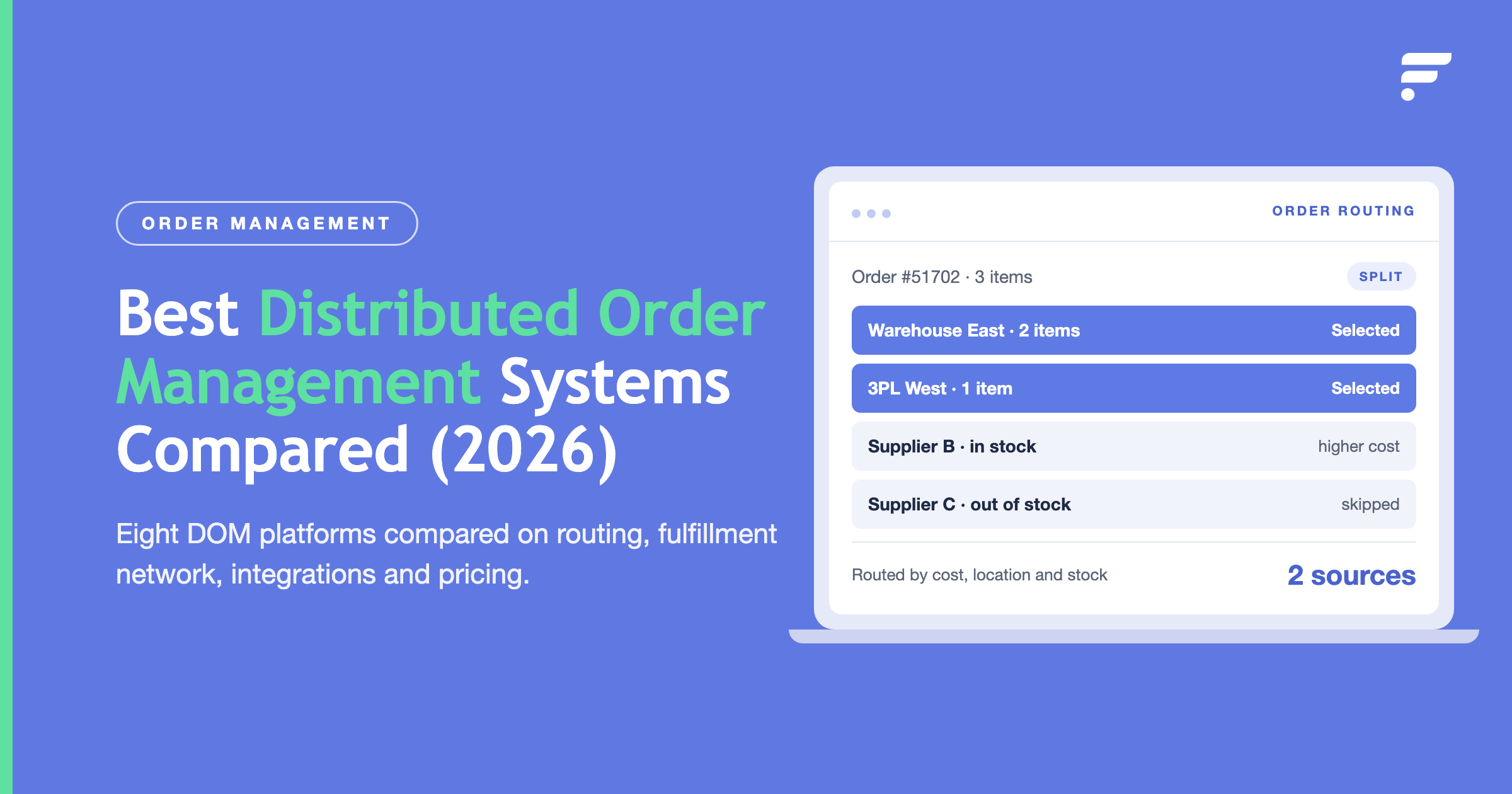
Flxpoint's order routing system automatically directs each order to the most appropriate fulfillment source; whether that's a 3PL dropshipping, warehouse, supplier, or your own facility. This rules-based automation forms the foundation of successful hybrid fulfillment.
You configure routing logic based on inventory availability, proximity to the customer, or preferred suppliers. The system makes these decisions instantly for every order, ensuring efficient and cost-effective fulfillment without manual intervention. Orders route to the closest warehouse with available stock, fall back to secondary facilities if needed, and ultimately dropship if warehouse inventory is unavailable.
This automated routing solves one of the most critical failure points in 3PL Dropshipping operations: order routing logic failures that send orders to distant warehouses while closer facilities have stock, or unnecessarily split shipments across multiple locations.
Real-time inventory synchronization prevents overselling
Flxpoint centralizes inventory management with real-time synchronization across all channels and fulfillment methods. This prevents the overselling and stock discrepancies that plague businesses managing multiple 3PLs and dropship suppliers manually.
The platform connects with multiple suppliers, monitors their inventory in real-time, and integrates them directly into the order fulfillment workflow. When inventory levels change at any location; 3PL dropship warehouse, dropship supplier, or your own facility; those updates propagate across all sales channels immediately.
This real-time visibility addresses the inventory visibility failures that represent one of the highest-severity challenges in 3PL partnerships. Modern dropship retailers no longer discover stockouts after customers place orders, and they can confidently sell the same inventory pool across Amazon, Shopify, Walmart, and other channels without fear of overselling.
Shipping automation streamlines carrier integration
Flxpoint integrates with various shipping carriers and fulfillment centers, automating label generation, shipping updates, and order tracking. This streamlines the fulfillment process and improves customer satisfaction by keeping customers informed throughout delivery.
The platform handles the complexity of different carrier requirements, rate shopping for optimal shipping costs, and providing consistent tracking experiences regardless of which 3PL or dropship supplier fulfills the order. Customers receive the same quality of data communication whether their order ships from your primary warehouse, a backup 3PL, or directly from a supplier.
Managing complexity requires careful configuration
While Flxpoint provides the tools to manage dropship and hybrid dropshipping fulfillment models effectively, complexity introduces potential challenges that require attention. Setting up and maintaining routing rules for a sophisticated hybrid model; directing orders between a 3PL, internal warehouse, and multiple dropship suppliers; can become complex if not meticulously configured.
Although Flxpoint tracks expenses related to suppliers, fulfillment, and shipping, incorrect cost data from a 3PL or missed cost tracking rules can lead to inaccurate profitability calculations.
The quality of dropship and 3PL dropshipping fulfillment ultimately depends on supplier performance. Issues outside of any platform's control; a 3PL's slow fulfillment, poor packaging, or inaccurate tracking information; can negatively impact customer experience.
This makes reliable suppliers selection and ongoing performance monitoring essential components of successful hybrid fulfillment.