The platform decision for an FFL is different from a normal store. The site has to host a catalog of firearms, ammunition, optics, and accessories.
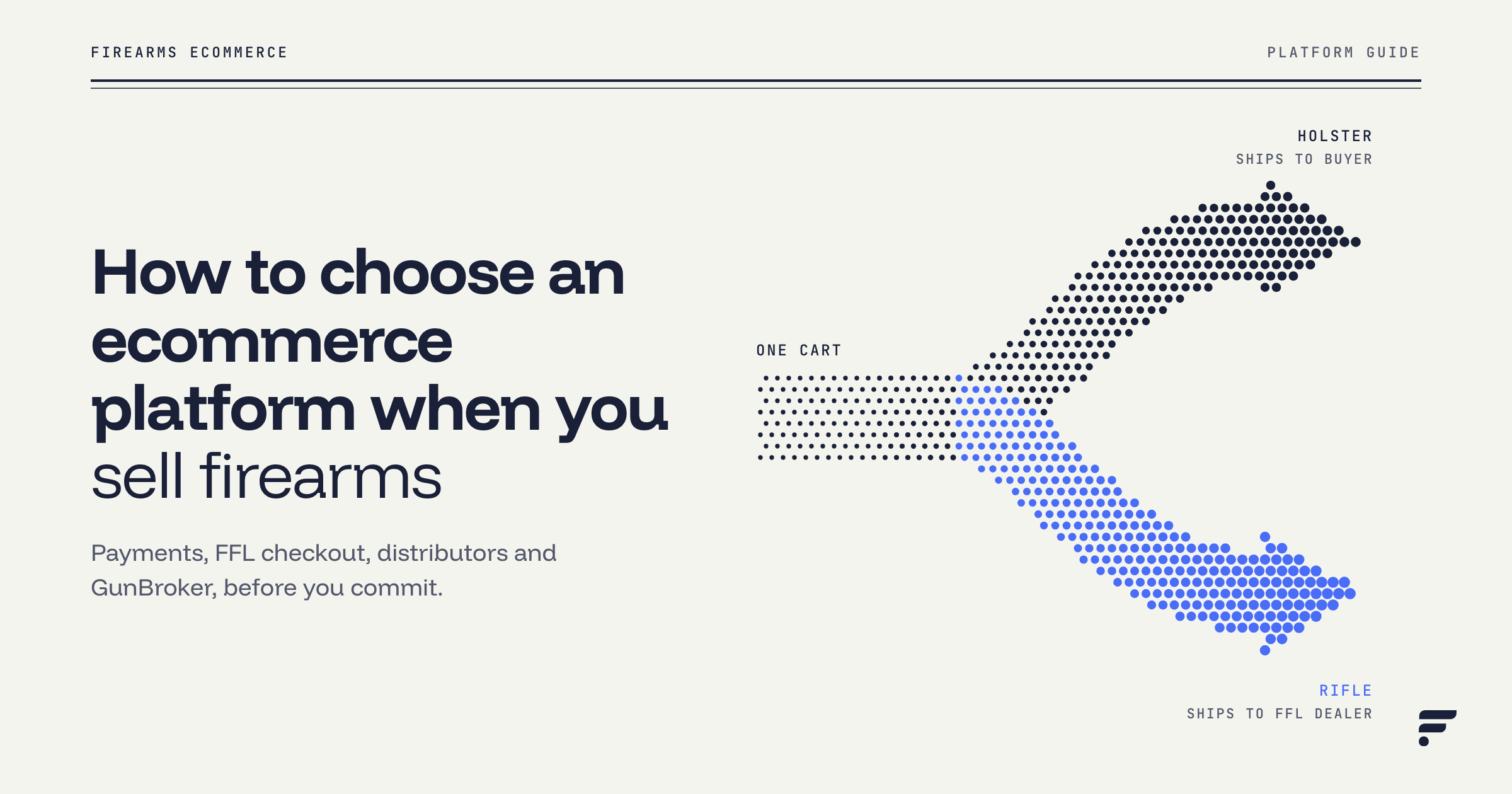
A processor has to underwrite the business. Checkout has to send a firearm to a receiving dealer for the transfer and 4473 while an accessory in the same cart can ship to the buyer. State rules change. Distributor feeds go stale. These are the constraints that make monthly prices the wrong starting point.
This post walks through the questions dealers ask when they are choosing or switching. The full comparison of BigCommerce, Shopware, WooCommerce and Adobe Commerce, Shift4Shop, Shopify, and the firearms-specific platforms, plus the rebuild-cost worksheet, is in the firearms ecommerce replatforming guide.
Should I pick a general platform or a firearms-specific one for my gun store?
General platforms (BigCommerce, self-hosted WooCommerce, Adobe Commerce) give more control over the storefront, themes, and content. They also require you to add FFL dealer selection, state blocking, and mixed-cart splitting through apps or custom work.
Firearms-specific platforms (Gearfire, AmmoReady, Coreware, FirearmCart) include those workflows in the box, along with firearms-friendly payment options in many cases.
The practical split at scale is this: stores that want full control of product pages, SEO, and listing quality usually stay on a general platform and handle distributors and order routing in a separate layer. Stores that want the FFL checkout, payments, and sometimes POS handled in one place and are comfortable with the platform’s exit terms often stay on or move to a category-specific option.
Neither is better by default. The replatforming guide sets out what each option includes and what its terms say before you commit.
Can an AI store builder like Lovable or Claude make a firearms ecommerce site?
It can build pages, but it can't run a gun store on its own. AI builders like Lovable generate a site's design and code. Claude and ChatGPT are assistants, not store platforms. None of them comes with FFL dealer selection, mixed-cart splitting, state restrictions, or distributor feeds.
The site still needs a host and a processor that accept firearms, so read their terms before you spend time on an AI-built storefront.
AI shopping won't sell your guns either. OpenAI's commerce policy prohibits firearms, ammunition, and firearm accessories, including magazines.
Where AI helps is the work around the store: drafting product descriptions, suggesting categories, and cleaning distributor data, with a person reviewing before anything publishes. If you run on Flxpoint, the Flxpoint MCP lets you ask questions about your own catalog and order data in Claude or ChatGPT.
What problems actually push FFL dealers to switch ecommerce platforms?
High monthly fees on thin margins are one reason. Declining support and distributor feeds that fall out of sync are larger ones. Stores also leave when product pages do not rank for model-specific searches, when they cannot add their own content, or when the platform cannot handle the split between store inventory and distributor inventory.
A year with little or no sales after the site is live is a common outcome when the platform provides no SEO help and the catalog is hard for search engines to index.
At volume, the trigger is often GunBroker. Dealers see competitors listing the same distributor inventory and realize the listings must be coming from an integrated feed.
Manual listing creation does not scale to tens of thousands of SKUs. Category rejection errors, stale stock, and the inability to keep GunBroker and the storefront in sync push stores to look for a better middle layer even if they keep the same storefront.
What still goes wrong with AmmoReady and Gearfire, and what is the practical alternative?
The complaints dealers raise most are slower support, distributor integrations that fall out of sync, little room for original content, and monthly fees that eat thin margins at modest volume.
One dealer reported zero sales after a year on a firearms-specific platform that offered no SEO help.
Some dealers have also been told that firearms platforms load the catalog inside an iframe, which would make thousands of products look like one page to Google. That claim is secondhand and unconfirmed for any platform, so test your own. Search Google for site:yourdomain.com plus an exact model you carry, and check that the product page has its own URL.
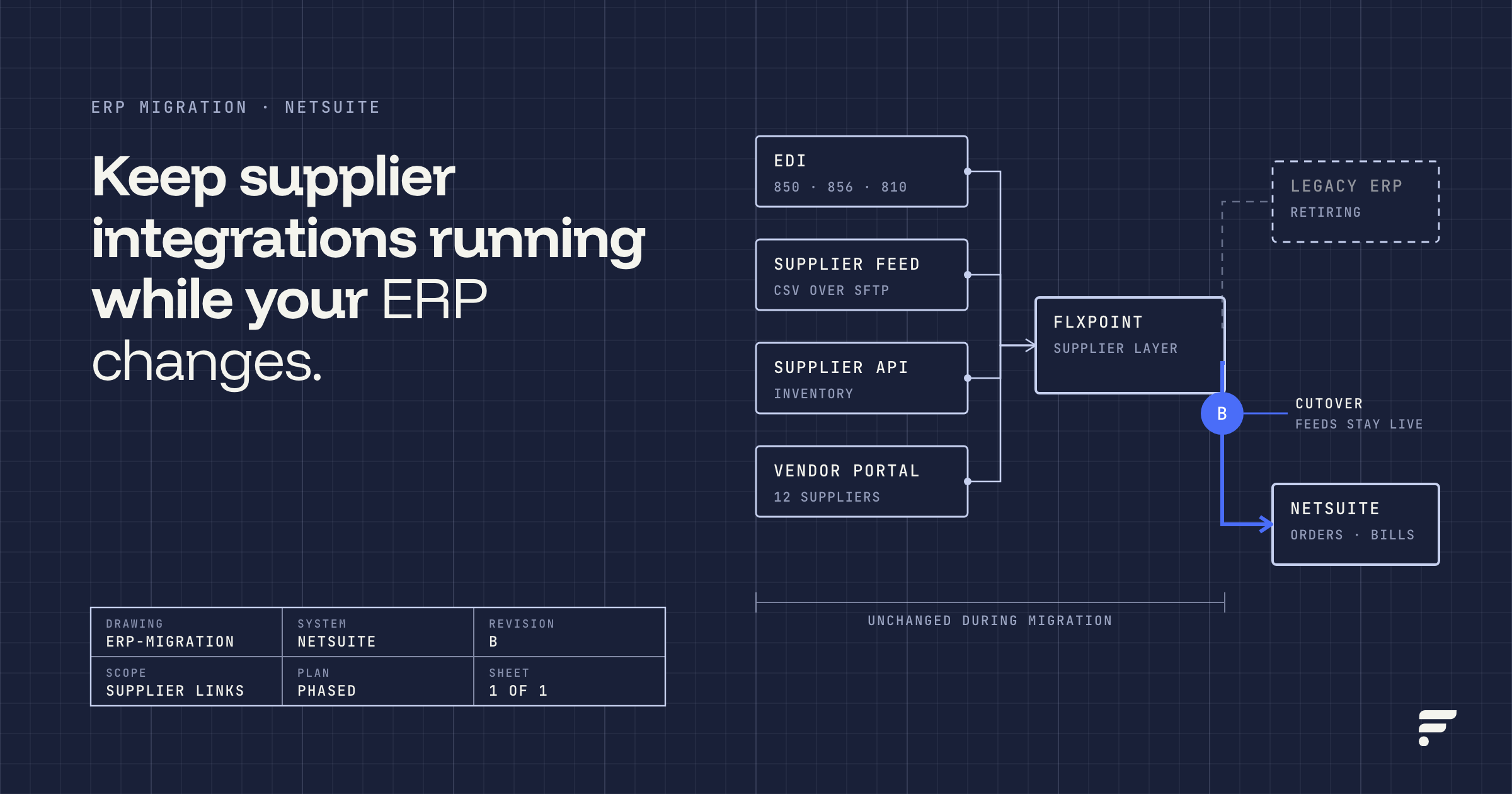
Plenty of dealers run these platforms happily for years. The practical alternative for many online-first stores is a general platform like BigCommerce or self-hosted WooCommerce, plus a separate supplier and order layer. The storefront handles the shopper. The layer handles multi-distributor inventory, order routing, holds, and channel feeds.
Before you give notice, the guide covers each platform's exit terms and what to ask first.
Is BigCommerce the best platform for a gun store?
It is one of the strongest managed options for stores that want several ready-made FFL dealer-selection apps. BigCommerce’s marketplace currently lists Master FFL, CloudFFL Finder, FFL Cockpit/g-FFL, and others.
Its acceptable use policy does not name firearms, so a written confirmation from the vendor is still required. Gateway fees on lower plans can apply when you use a firearms-friendly processor. For BigCommerce's policy wording and how it charges for outside payment gateways, see the guide.
It is not automatically the best choice. A lean online-first store that is comfortable with self-hosting may prefer WooCommerce because the core software is free and FFL plugins such as Automatic FFL are mature.
A shop that wants firearms workflows and payments in one box may still prefer a category-specific platform. BigCommerce works well when you want managed hosting, a large agency network, and ready-made FFL apps, and you are willing to confirm the firearms position in writing.
Do I need plugins, and which ones matter for a gun store going online?
Yes. Neither WooCommerce nor BigCommerce knows that a rifle must ship to a licensee while a holster can ship to the buyer. Automatic FFL (WooCommerce, BigCommerce, Magento) detects regulated items in the cart, shows an ATF-updated dealer map, and splits mixed carts so the correct items go to the correct address.
Master FFL on BigCommerce adds automated dealer contact, EZ Check validation, and SOT checks for NFA items, then writes the transfer record back to the order.
These plugins matter because every mixed order otherwise becomes manual work: the customer emails a dealer choice, someone verifies the license, and the order is held or split by hand.
For a store that is adding online sales on top of counter traffic, that manual step is the first bottleneck. The plugins do not replace compliance review. They remove the steps that currently happen in email and spreadsheets.
Which processor will let me take cards on my website?
Probably not the one on your counter. Many processors approve card-present gun sales but treat online orders as a separate, riskier category. Running web orders through a counter-only account can get it frozen with funds held. Ask in writing whether your account covers card-not-present sales.
Underwriters also look at the site itself. Have it live, with clear refund and shipping policies, contact details, a business address, and some sales history before you apply. Where you sell matters too. California, Colorado, and New York require the firearms merchant code MCC 5723, while about 20 states prohibit a firearm-specific code.
For what each major processor's policy says about firearms, see the payments section of our replatforming guide.
Can I hold and split an order that mixes an NFA item with something that ships direct?
Yes. A cart with a suppressor and an accessory gets split. The accessory ships to the buyer right away. The suppressor holds until the receiving dealer's details are complete and validated, and that dealer needs to handle NFA items.
In Flxpoint, a Requires FFL field marks which items need a dealer, and it carries from the supplier feed through products and listings. Mixed orders split automatically, so non-firearm items ship immediately while firearm lines wait. Flxpoint checks the license number, expiration date, and address before the request goes to the supplier. Orders missing those details hold for review and never reach the distributor. On BigCommerce, dealer details from Master FFL attach to the order on import.
Volume makes this matter more in 2026. On October 9, 2026, ATF said it would stop enforcing NFA approval and registration for suppressors, SBRs, SBSs, and AOWs. Form 4473, background checks, and bound book entries still apply, some states still ban these items, and ATF says the policy could change. Machine guns and destructive devices are unaffected.
How do I keep 30,000 GunBroker listings and my own site in sync?
High-volume sellers don't create listings by hand. They push one master catalog to GunBroker and their storefront, matched on UPC or manufacturer part number, with the right category, title, and subtitle. UPCs pay off on GunBroker. Listings with a UPC get product videos added automatically and are included in qualifying manufacturer promotions.
Category mapping is where bulk listing usually breaks. Flxpoint's AI category mapping reads titles, descriptions, categories, and UPCs to suggest the lowest-level GunBroker category.
It currently covers items from RSR, Chattanooga Shooting Supply, and Sports South, and Flxpoint says it cuts listing prep time by up to 90%. Flxpoint also supports GunBroker auctions and relists items automatically when they come back in stock, so you don't relist out-of-stock guns by hand.
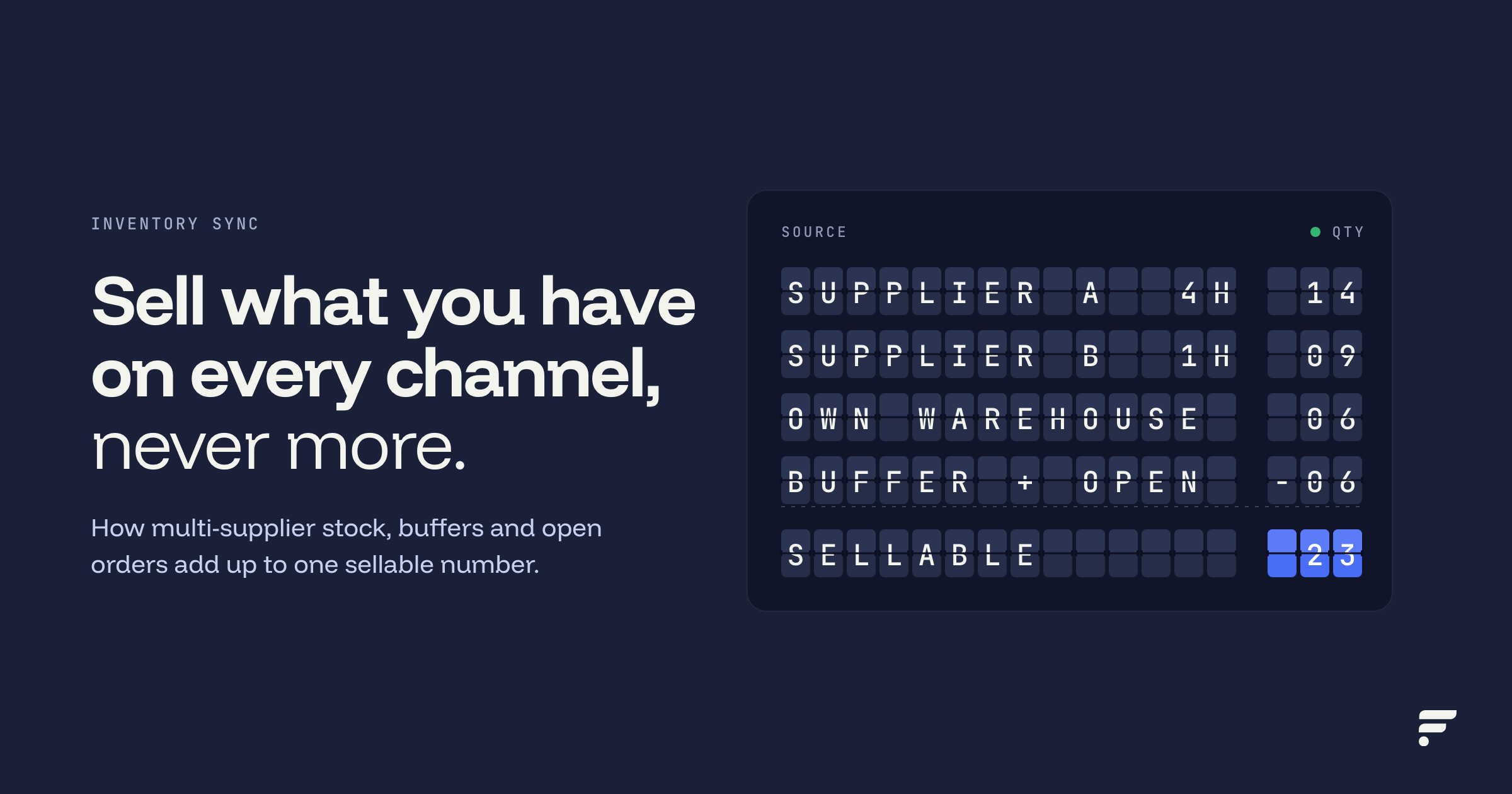
When a distributor's quantity changes, both the GunBroker listing and the storefront update from the same record. That's how you avoid a gun selling on one channel while the other still shows stock.
Get our replatforming guide
If you're choosing a platform or leaving one, our free guide puts the decision in one place. It covers which processors will underwrite you, how each platform compares, which FFL checkout apps fit, what to ask an agency, how to protect your search rankings during the move, and the exit terms of the firearms-specific platforms. Every price and policy links to the vendor's own page. It also includes a worksheet that prices your rebuild from your own quotes. No form required.
This post is general information, not legal advice. Federal, state, and local firearms law varies, so confirm your obligations with ATF, your state, or a firearms attorney.