Midsize retailers centralize inventory across multiple suppliers with a multi-supplier inventory platform: software that pulls each supplier’s feed, file, API or EDI data into one normalized catalog, calculates sellable quantity, and routes orders back to the right source. For retailers and distributors managing dozens of dropship vendors, warehouses and 3PLs with a lean team, Flxpoint is built for this job. Enterprise retailers running large EDI vendor programs often look at Rithum, Logicbroker or SPS Commerce, and small stores that mainly want ready-made products tend to start with Syncee or Inventory Source.
This guide compares eight platforms on how they connect suppliers, clean up catalog data, manage quantity, route orders and charge for it, so you can match a tool to your company size and supplier count.
What does a multi-supplier inventory platform do?
A multi-supplier inventory platform sits between your suppliers and your sales channels. Instead of downloading spreadsheets from every vendor and updating your store by hand, the platform does five things on a schedule:
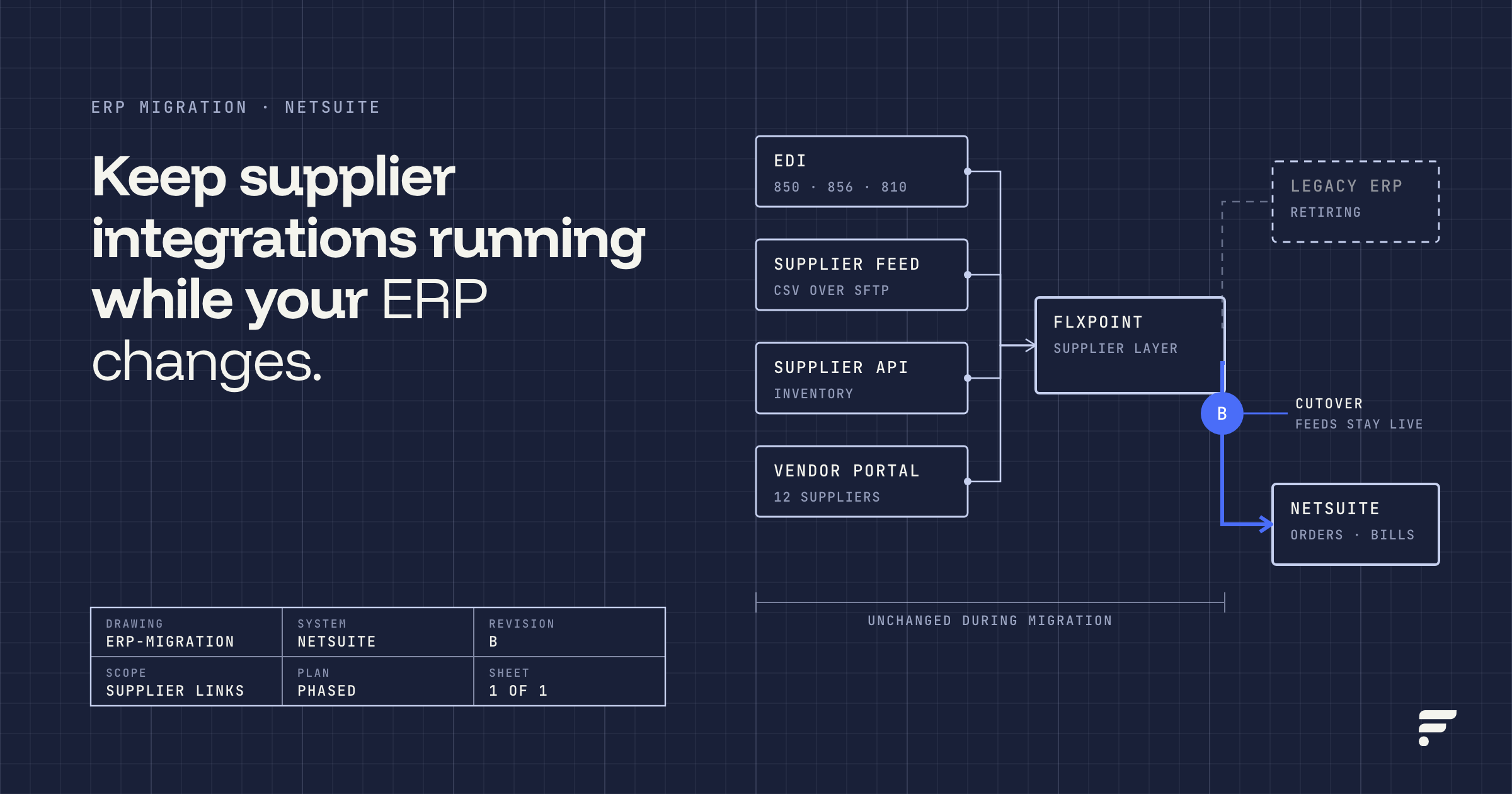
- Connects to each supplier using whatever that supplier can send: a CSV or XML file over FTP or email, an API, or EDI documents.
- Normalizes the catalog so that SKUs, titles, attributes, costs and images from different suppliers map to one product record.
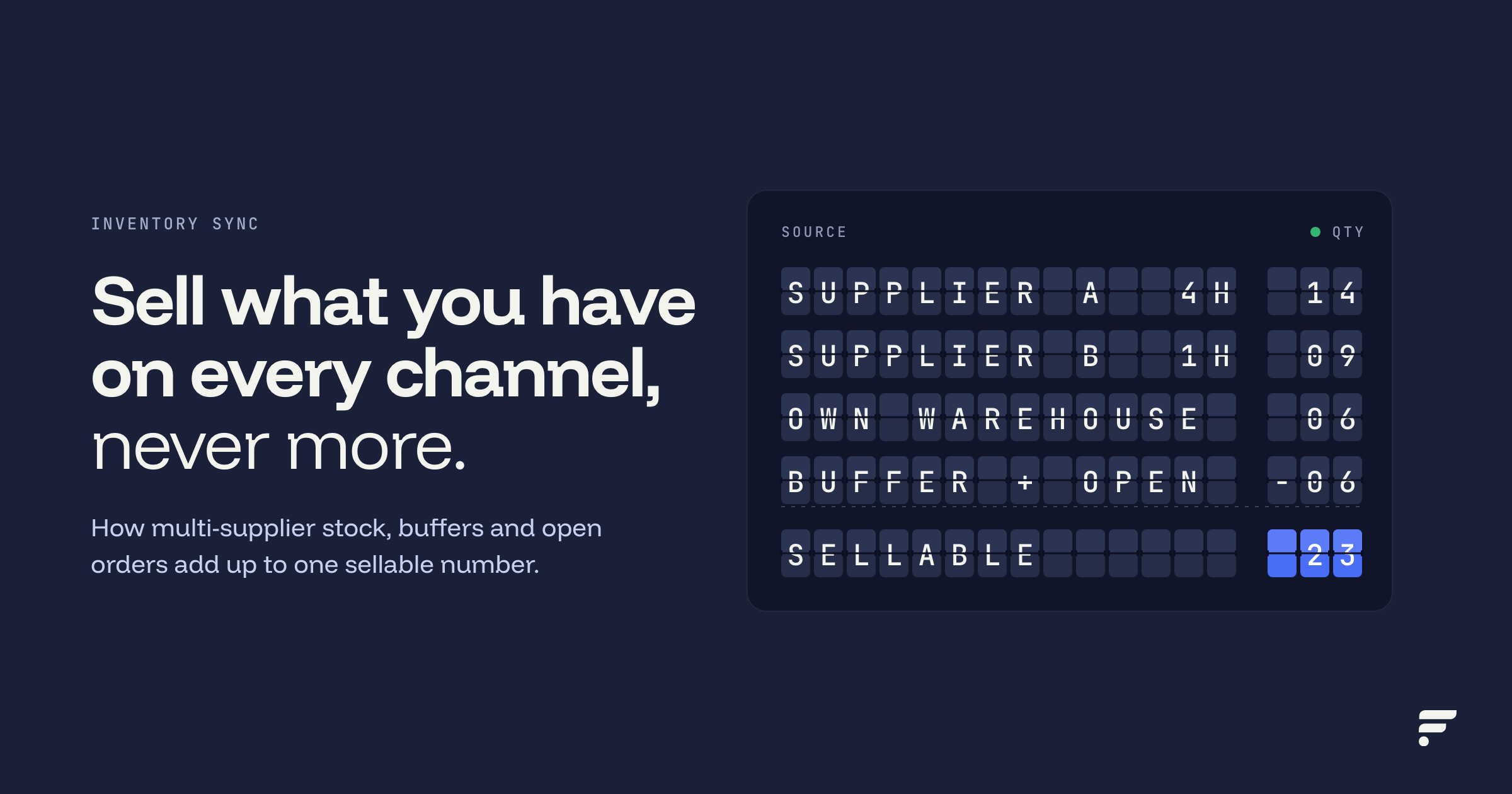
- Aggregates quantity across sources (for example, your warehouse plus two distributors) and applies buffers so you don’t sell stock that already moved.
- Pushes inventory and pricing to your storefront and marketplaces.
- Routes orders to the supplier, warehouse or 3PL that should fulfill them, then sends tracking back to the channel.
Some tools in this category are supplier marketplaces (you pick products from their network), some are enterprise dropship networks (your vendors connect to you through them), and some are operations platforms that connect any supplier you already work with. Knowing which model you need narrows the list fast.
How we evaluated these platforms
We reviewed each vendor’s own website and help documentation in October 2026 and compared them on six criteria that matter most to a midsize retailer:
- Supplier connection methods: support for flat files (CSV, XML, Excel) over FTP, SFTP or email, plus API and EDI, and whether a supplier portal is available for vendors with no technical resources.
- Catalog normalization: mapping supplier fields to your own product schema without a developer.
- Quantity aggregation and buffers: combining stock from several sources for the same SKU and holding back safety stock to prevent overselling.
- Order routing: rules that pick a fulfillment source by stock, cost or location.
- Channels: which ecommerce platforms and marketplaces the tool publishes to.
- Pricing model: whether pricing is published, and how it scales.
Multi-supplier inventory platforms compared
| Platform | Best for | Supplier connections | Order routing | Pricing |
|---|---|---|---|---|
| Flxpoint | Midsize retailers and distributors with many dropship vendors, warehouses and 3PLs | File (FTP, SFTP, email), API, EDI, vendor portal, prebuilt vendor integrations | Rules by stock, cost and location | Business plan from $699/month billed annually; Pro and Enterprise quoted |
| Rithum | Large retailers running dropship and marketplace programs alongside channel listings | Suppliers onboard through the Rithum network | Yes, as part of dropship workflow | Pricing on request |
| Logicbroker | Enterprise retailers, brands and distributors orchestrating multi-vendor commerce | API, EDI (X12, EDIFACT), no-code supplier portals | AI-assisted routing | Pricing on request |
| SPS Commerce | Retailers and suppliers that run on EDI with large trading-partner networks | API, EDI, flat file via FTP, VAN, AS2 | Order Central handles replenishment ordering. Ask about dropship routing rules. | Pricing on request |
| Spark Shipping | Small to midsize stores automating dropship across several vendors | API, FTP, EDI, email, CSV or XML | Route to best supplier by inventory and cost | Published plans from $299/month; Enterprise on request |
| Inventory Source | Small stores starting dropship from a directory of pre-integrated suppliers | 180+ pre-integrated dropship suppliers | Order routing to dropship suppliers | See vendor site |
| Syncee | Small stores sourcing products from a supplier marketplace | Syncee marketplace, plus DataFeed Manager for your own supplier files | Automated order management for marketplace suppliers | Free plan; paid plans from $39.99/month |
| Linnworks | Sellers holding their own stock across warehouses and many marketplaces | Supplier purchase orders; routes orders to dropship suppliers | Automated routing to warehouses, 3PLs or dropship suppliers | Quote on request |
The best multi-supplier inventory platforms in 2026
1. Flxpoint
Best for: midsize retailers, distributors and brands that sell from a mix of their own warehouses, 3PLs and dropship vendors, and want to connect any supplier without hiring developers.
Key features:
- Connects suppliers through no-code file mapping (FTP, SFTP and email), API and EDI, with prebuilt vendor integrations and a team that builds custom API and EDI connections when a supplier isn’t prebuilt.
- A self-service vendor portal where suppliers can manage their own products, pricing and inventory.
- Quantity rules that combine stock from multiple sources for the same SKU (lowest, highest, average or sum) and inventory buffers that hold back units when supplier feeds lag.
- Cost and margin comparison across fulfillment partners, so you can prioritize a supplier without risking a stockout.
- Order routing to the right supplier, warehouse or 3PL based on stock levels, pricing or location, plus pre-order and back-order handling.
- Listing management across channels including Shopify, BigCommerce, Magento, WooCommerce, Amazon, eBay and Walmart.
Proof: Flxpoint holds a 4.7 rating on G2 from 100+ reviews. Kenneth Cole reported a 90% reduction in costs and 2x year-over-year revenue growth, Realtree saw a 58% increase in dropship revenue, a 79% increase in units sold and 90% faster partner onboarding, and ScreenSkinz saved 95% of time on manual tasks.
Considerations: Flxpoint is an operations platform for suppliers you already work with or plan to add, not a marketplace of products to browse. A brand-new store that wants to pick trending products from a catalog will get there faster with Syncee or Inventory Source. Large enterprise retailers whose vendors already sit on an established retail EDI network may prefer a network-based provider.
2. Rithum (formerly CommerceHub and ChannelAdvisor)
Best for: large retailers and brands that want dropship, marketplace and channel listing management from one enterprise vendor.
Key features:
- Retailers onboard suppliers through the Rithum platform instead of building a new integration for each one, with catalog, inventory, order and fulfillment data in one place.
- Catalog and inventory sync with controls such as inventory buffers, threshold-based blocking and alerts to reduce overselling.
- Dropship and private marketplace programs on the same platform, plus SupplyExplorer (launched April 2026) to help retailers find and connect with suppliers in the Rithum network.
- Listing management across 600+ marketplace and retail integrations, plus the RithumIQ AI engine.
Considerations: Rithum is built for enterprise scope, and pricing is on request. Midsize retailers should confirm which modules they need and what onboarding involves for suppliers who are not already in the Rithum network.
3. Logicbroker
Best for: enterprise retailers, brands, distributors and 3PLs running dropship, marketplace, B2B and D2C programs with many vendors.
Key features:
- Supplier connections through REST APIs with webhooks, EDI (ANSI X12 and EDIFACT, with VAN integration) and branded no-code portals for suppliers without technical resources.
- A network that Logicbroker describes as more than 15,000 connected suppliers, plus 100+ integrations.
- AI-powered order routing and real-time inventory synchronization.
Considerations: Logicbroker positions itself for enterprise programs, and its featured customers are large national brands. Pricing is on request, so midsize teams should ask how the platform is packaged for smaller supplier counts.
4. SPS Commerce
Best for: retailers, suppliers and distributors whose trading partners require EDI, especially in traditional retail supply chains.
Key features:
- Supports APIs, EDI and flat files, with connectivity over FTP, VAN and AS2.
- Drop ship tooling for retailers covering item information in the format you require and near real-time inventory.
- Broader supply chain network, item data and sales analytics offerings across retail, grocery and other industries.
Considerations: SPS Commerce is strongest as an EDI and trading-partner network. Retailers who also need catalog normalization, multi-source quantity rules and storefront listing should check how much of that is covered natively versus in another system.
5. Spark Shipping
Best for: small to midsize ecommerce stores automating dropship with a handful to a few dozen vendors.
Key features:
- Supplier connections via API, FTP, EDI, email and CSV or XML files.
- Product imports from suppliers, plus the option to connect multiple suppliers to a single product.
- Order routing to the best supplier based on inventory and cost, with tracking sent back to your store.
- Integrations with Shopify, BigCommerce, WooCommerce, Magento, Amazon, eBay and Walmart Marketplace.
Considerations: Spark Shipping publishes tiered pricing, which makes budgeting simple. Retailers with warehouses, 3PLs and dropship vendors in the same catalog should test how well it handles mixed fulfillment sources at their volume.
6. Inventory Source
Best for: small online stores that want to start dropshipping from a directory of suppliers that are already integrated.
Key features:
- A directory of more than 180 pre-integrated dropship suppliers across many niches.
- Automated inventory sync, product data updates and order routing to dropship suppliers.
- Integrations with platforms including Shopify, WooCommerce, BigCommerce, Magento, Amazon, Walmart and eBay.
Considerations: Inventory Source is built around its supplier directory. Retailers who need to connect their own vendors by EDI or custom files, merge the same product from several suppliers into one listing, route orders across warehouses and 3PLs, or manage complex quantity rules may find Flxpoint a better fit. Existing Inventory Source users can connect their account to Flxpoint and bring their products over instead of starting from scratch.
Disclosure: Inventory Source is a sister company of Flxpoint. We included it because its supplier directory solves a different problem: helping newer stores start dropshipping quickly.
7. Syncee
Best for: small stores that want to source products from a dropshipping and wholesale marketplace with low upfront cost.
Key features:
- A marketplace that Syncee says includes more than 12,000 brands, with AI-assisted product sourcing and automated order management.
- DataFeed Manager for importing products from your own supplier's feed in CSV, XML, XLS(X), or JSON format from a URL, FTP, or cloud storage such as Google Drive or Dropbox.
- Integrations with platforms including Shopify, WooCommerce and Wix.
Considerations: Syncee is marketplace-first. Its help center notes that DataFeed Manager is available only on certain platforms (such as Shopify), so retailers with many direct suppliers, EDI requirements or marketplace channels like Amazon should confirm fit.
8. Linnworks
Best for: multichannel sellers that hold their own stock in one or more warehouses and sell across many marketplaces.
Key features:
- Inventory, orders, listings and shipping across 100+ marketplaces and channels, including Amazon, eBay and Shopify.
- Stock movements across multiple warehouses and supplier purchase orders.
- Rules-based order routing to your own warehouse, a 3PL or dropship suppliers, plus carrier selection and labels.
Considerations: Linnworks is built mainly around owned inventory and marketplace selling, although it can route orders to dropship suppliers. If most of your catalog comes from dropship vendors who send files or EDI, confirm how supplier stock would flow into Linnworks before committing.
How should a midsize retailer choose a platform to manage many suppliers?
Start with two numbers: how many suppliers you work with, and how many of them can only send files or EDI. Then match your situation to the right model.
Small stores with fewer than 10 suppliers
If you are testing products and don’t yet have supplier relationships, a marketplace like Syncee or a directory like Inventory Source gets you selling quickly. If you already have a few vendors with feeds, Spark Shipping or the Flxpoint Business plan are reasonable next steps.
Midsize retailers with 10 to 100+ suppliers
This is where spreadsheets break. You need no-code file mapping, EDI and API on the same platform, quantity rules across sources, and order routing that accounts for cost and location. Flxpoint is designed for this range, especially when your catalog mixes owned stock, 3PLs and dropship vendors.
Enterprise retailers with hundreds of vendors on EDI
If your vendor program requires a formal retail network, compliance scorecards and EDI at scale, compare Rithum, Logicbroker and SPS Commerce. Ask each how they handle suppliers that can’t do EDI.
Sellers who mostly hold their own stock
If suppliers ship to your warehouse and your challenge is selling across many marketplaces, a multichannel tool like Linnworks may fit better than a dropship-first platform.
Whichever direction you lean, ask every vendor to demo three things with your real data: onboarding your most difficult supplier file, combining quantity from two sources for one SKU, and routing a split order.
Frequently asked questions
How do midsize retailers centralize inventory across multiple suppliers?
They connect every supplier feed, file, API and EDI source to one platform that normalizes the catalog, combines quantity for each SKU, applies buffers, and syncs the result to every sales channel. Flxpoint does this for retailers that mix dropship vendors, warehouses and 3PLs.
What is the difference between a supplier marketplace and a multi-supplier inventory platform?
A supplier marketplace, like Syncee, gives you a catalog of products from suppliers in its network. A multi-supplier inventory platform, like Flxpoint, connects the suppliers you choose, whatever format their data comes in, and automates inventory and orders with them.
Do I need EDI to manage many suppliers?
Not always. Many distributors send CSV or XML files over FTP or email, and others offer APIs. Larger vendors and big-box trading partners often require EDI, so choose a platform that handles all three rather than one that forces every supplier into a single format.
How do inventory buffers prevent overselling?
A buffer subtracts a set number of units from what a supplier reports, so your store shows slightly less than is available. When a supplier feed updates hours apart, the buffer absorbs sales that happened in between.
How much does multi-supplier inventory software cost?
Marketplace tools start with free or low-cost plans, such as Syncee’s free plan and paid plans from $39.99 per month. Flxpoint’s Business plan starts at $699 per month billed annually. Enterprise network providers such as Rithum, Logicbroker and SPS Commerce quote pricing on request.
Can one platform route orders to different suppliers automatically?
Yes. Platforms such as Flxpoint, Spark Shipping and Logicbroker route orders to a supplier or warehouse based on rules like stock availability, cost or location, then return tracking to the sales channel.
Find the right fit for your supplier network
If you manage more suppliers than your team can update by hand, the right platform pays for itself in fewer oversells and faster vendor onboarding. See how Flxpoint connects your suppliers, warehouses and channels in one place: book a demo.