Selling stationery online looks simple from the outside. One notebook, list it, done. Then you add a second size, a third cover finish, and a refill pack, and that one notebook turns into forty listings you have to keep in sync across Amazon and your own store. This is where most stationery sellers stall.
The demand is there. The stationery and supplies market sat at roughly $152 billion in 2025, with online marketplaces growing close to 6.9% a year through 2031, faster than physical stores. Buyers are moving to where you sell. The hard part isn't finding customers. It's running a high-variant catalog without spending your week on manual updates.
Here's how to build a stationery dropship operation that holds up once the SKU count climbs.
Start with suppliers that support automated dropship
Not every wholesale stationery supplier runs a dropship program, and the ones that do don't all run it well. Before you list a product, get clear on three things.
First, the dropship terms: who ships, what the per-order fee is, and how returns get handled. Second, whether the supplier sends a live product feed or just a spreadsheet you import by hand. Third, how often that feed refreshes. A feed that updates once a day behaves very differently from one that updates every hour.
Feed format decides how current your data stays:
- API pulls data close to real time, so stock and price changes show up fast.
- EDI moves data in scheduled batches, common with larger distributors.
- CSV or FTP drops a flat file on a set schedule, usually daily.
Several national office and school wholesalers also carry deep stationery lines and run established dropship feeds. Essendant, SP Richards, and Educators Resource are three of them. The quickest way to see which suppliers already connect to your platform is to check a supplier directory before you commit.
Publish the catalog without rebuilding every variant
This is the question that decides whether stationery is worth selling at scale: how do you manage a product with dozens of variants across thousands of SKUs without rebuilding listings by hand?
You need a PIM, a product information layer that sits between your suppliers and your channels. A PIM stores each product once as a parent with its variants attached, so a notebook in twelve colors and three sizes is one record, not thirty-six disconnected ones. You map the supplier's variant attributes, things like color, size, and pack count, a single time. After that, new variants from the supplier slot into the existing parent on their own instead of landing as orphan SKUs you have to find and fix.
Enrich the listing once in the PIM, with titles, specs, and images, then push it to every channel from there. When you want to change a description, you change it in one place and it updates everywhere.
Keep price and stock accurate on every channel at once
A supplier raises prices on Wednesday. If your Amazon and Shopify listings still show Monday's price, you either eat the difference or cancel orders. Both cost you.
Scheduled syncs solve this. The same software that runs office and school supply feeds handles stationery the same way: it reads the supplier's current cost on the schedule you set, applies your pricing rules (a fixed markup, a margin target, or channel-specific pricing), and writes the new numbers to every storefront in the same cycle. Amazon and Shopify update together, not three days apart.
Route each order to the source that protects your margin
Once you carry the same SKU from more than one supplier, every order is a small decision. Which source ships it cheapest, and which one actually has it in stock?
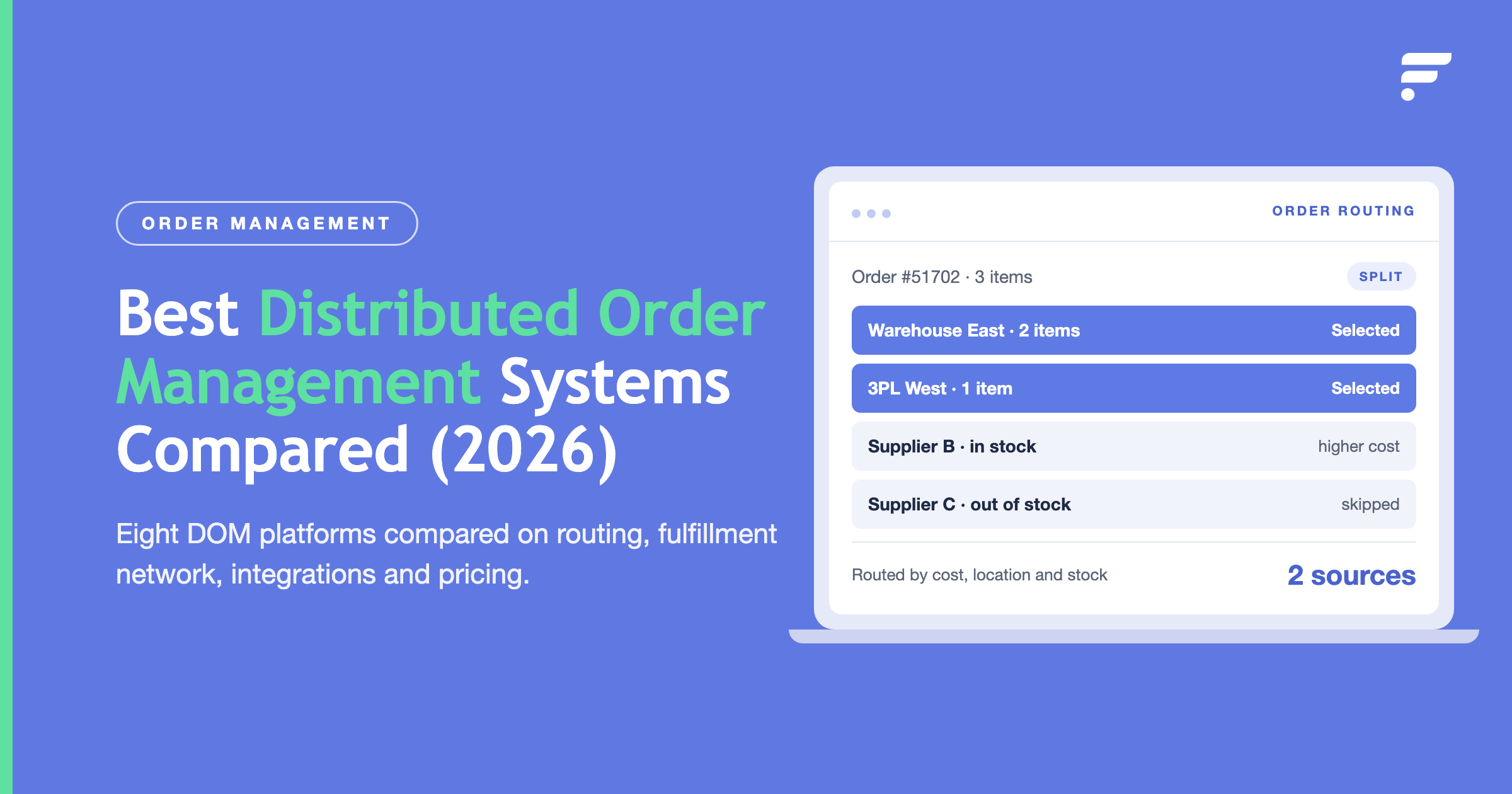
Set up cost-aware routing rules. For each order, the system checks supplier stock, location, and your cost rules, then sends it to the source that costs the least to fulfill. When one supplier can't fill the whole order, it splits across two. When no rule fits cleanly, it holds the order for review instead of routing it to a source that can't ship. That hold is what saves you from the cancellations that drag down your seller metrics.
Stop selling what you can't ship
Overselling a $6 planner doesn't just refund badly. On Amazon it dents your account health. So the suppression has to happen before the customer checks out, not after.
Two settings do most of the work. Set a buffer threshold, so a SKU stops selling when supplier stock drops to, say, five units rather than zero. That cushion absorbs the lag between feed updates. Then auto-delist a listing the moment distributor stock hits zero, and bring it back when stock returns. On top of that, the routing step rechecks live stock before it places any order, so a sale that slips through still gets caught before money changes hands.
Plan for the back-to-school spike
Stationery demand isn't flat. It climbs hard in late summer, and manual processes break exactly when volume is highest. If you want a month-by-month plan for getting your supplier feeds and order flow ready before the rush, Flxpoint's Office and School Supplier Playbook lays out a 30-day version and maps which of your suppliers already connect.
Where to start
Get one supplier connected with a clean feed, build your variants properly, and turn on stock suppression before you scale your listings. Selling across more channels only pays once the data behind those channels stays right on its own. See how the multi-channel listing and PIM tools manage variants and keep channels in sync.
FAQ
Question: How do I manage stationery products with dozens of variants across thousands of SKUs without rebuilding listings manually?
Answer: Use a PIM that stores each product as a parent with its variants attached. You map the supplier's variant attributes (color, size, pack) once, and new variants attach to the existing parent on their own. You enrich and edit the listing in one place, then push it to every channel, so a twelve-color notebook never becomes thirty-six separate jobs.
Question: Which wholesale stationery suppliers support automated dropship, and what feed formats do they use?
Answer: Several large office and school distributors that carry stationery, including Essendant, SP Richards, and Educators Resource, run dropship feeds. Suppliers commonly send data over API, EDI, CSV, or FTP. Check a supplier directory to confirm which ones already connect to your platform before you sign on.
Question: How do I keep listings accurate on Amazon and Shopify at the same time when a supplier changes pricing?
Answer: Run scheduled syncs that read the supplier's current cost, apply your pricing rules, and write updated prices to all channels in the same cycle. Both storefronts then reflect the new price together instead of drifting apart for a few days.
Question: What order routing rules should I set for a stationery operation with multiple suppliers per SKU?
Answer: Use cost-aware rules that check stock, location, and cost, then route to the cheapest source that can ship. Split orders when one source can't fill them, and hold any order that doesn't match a rule rather than sending it to a supplier who's out of stock.
Question: How do I automate suppression of out-of-stock listings before a customer orders?
Answer: Set a buffer threshold so SKUs stop selling before stock hits zero, and auto-delist listings when distributor stock runs out. A final stock check at the routing stage catches anything that slips through before the order is placed.