.svg)


.svg)

.png?width=40&height=40&name=Untitled%20design%20(53).png)


Table of Contents
- Introduction
- NetSuite as a financial and operational backbone
- Native capabilities for order, inventory, and fulfillment management
- Where manual work still persists in ecommerce environments
- How high-volume, multi-channel businesses stress-test the platform
- The Bottom Line
Introduction
NetSuite has earned its reputation as one of the world's leading cloud ERP platforms. According to NetSuite, the platform serves more than 40,000 customers globally across 219 countries, making it one of the most widely adopted SaaS solutions for enterprise operations. For ecommerce businesses, NetSuite provides the financial infrastructure and operational framework necessary to manage complex, multi-entity operations at scale.
But here's the reality most businesses discover after implementation: NetSuite excels at what it was designed to do; financial management, inventory tracking, and order processing; yet it wasn't purpose-built for the modern ecommerce landscape where merchants sell across five marketplaces, source from dozens of dropship vendors, and process thousands of orders daily.
Understanding where NetSuite shines and where it shows its limitations is the first step toward building a scalable ecommerce operation.
NetSuite as a financial and operational backbone
Source link
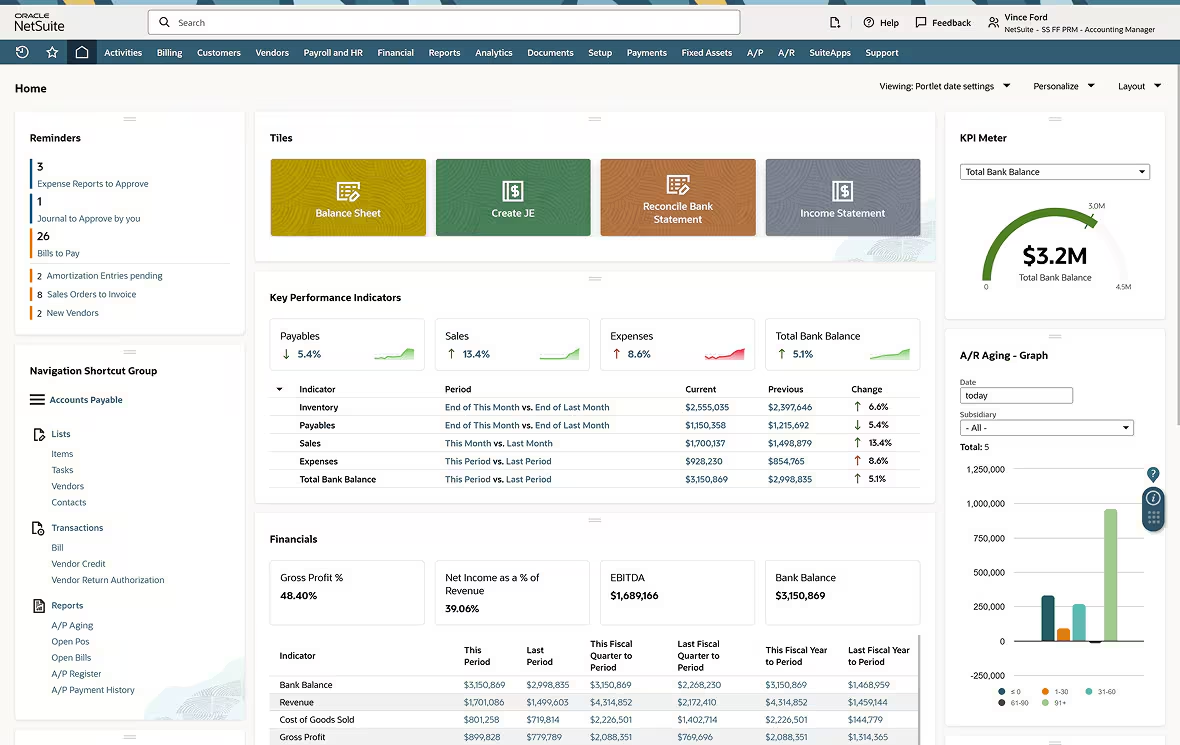
NetSuite's core strength lies in its ability to consolidate financial and operational data into a single system of record. For ecommerce businesses, this means your revenue, cost of goods sold, inventory valuations, and vendor payments all flow through one NetSuite ecommerce automation platform instead of being scattered across multiple spreadsheets and disconnected tools.
The platform tracks every transaction from the moment a customer places an order to when you reconcile vendor bills and calculate profit margins. This unified view is critical for businesses that need accurate financial reporting, especially those managing multiple sales channels, warehouses, or international subsidiaries.
NetSuite's multi-subsidiary functionality allows you to operate distinct business units under one umbrella while maintaining separate financials, currencies, and tax structures. If you're selling through a US entity, a UK subsidiary, and a Canadian division, NetSuite consolidates everything for reporting while keeping each region's books separate for compliance.
For ecommerce teams, this financial backbone supports decisions like pricing strategy, inventory investment, and vendor negotiations. When you can see true landed costs, including freight and tariffs, you make better choices about which products to stock and which vendors to prioritize.
Native capabilities for order, inventory, and fulfillment management
NetSuite includes built-in modules for managing the entire order-to-cash cycle. When configured properly, the NetSuite ecommerce automation platform can create sales orders, generate purchase orders for dropship vendors, track item fulfillments, and create invoices; all without leaving the system.
The dropship workflow in NetSuite is straightforward in theory. When a sales order comes in for a dropship item, NetSuite automatically generates a linked purchase order to your preferred vendor. You can configure the system to email that purchase order, keeping your accounting clean by recording revenue and cost of goods sold without adding physical stock to your inventory.
Inventory management in NetSuite allows you to track stock levels across multiple locations, set reorder points, and manage bin locations within warehouses. The system supports various inventory valuation methods, lot tracking, serial number management, and even landed cost calculations that factor in freight and customs fees.
For fulfillment, NetSuite's item fulfillment records capture when orders ship, including tracking numbers, carrier information, and shipment dates. These records tie back to your sales orders and update inventory automatically, maintaining an accurate view of what's available to sell.
Where manual work still persists in ecommerce environments
Despite these capabilities, most ecommerce businesses hit friction points almost immediately. The native tools work well for simple scenarios; one vendor per SKU, low order volumes, straightforward fulfillment paths; but they break down when complexity enters the picture.
Consider the item creation process. Every product you sell needs an item record in NetSuite, and for dropship operations, you need to configure each record with specific settings: mark it as a dropship item, assign a preferred vendor, set pricing tiers, and map it to your sales channels. According to research on NetSuite implementations, creating a single item record can take five to 15 minutes when done manually. Multiply that across hundreds or thousands of SKUs, and you're looking at weeks of data entry.
Vendor inventory management is another gap. NetSuite won't automatically pull inventory feeds from your suppliers. Unless you build custom integrations or manually import CSV files, your system doesn't know what your vendors actually have in stock. This leads to overselling, backorders, and frustrated customers who ordered products you can't deliver.
Order routing presents similar challenges. NetSuite's preferred vendor logic works when you have one supplier per item, but what happens when three vendors carry the same product at different prices? Or when your primary vendor is out of stock but your backup has inventory?
The system can't dynamically route orders based on real-time availability, cost, or shipping speed. Someone has to review each purchase order and manually adjust vendor assignments.
Tracking number management becomes a manual copy-paste exercise. When vendors ship orders and send tracking information via email or CSV, your team manually enters those tracking numbers into item fulfillment records. At low volumes, this is tedious. At high volumes, it's a full-time job that introduces constant errors and delays in customer communication.
Returns add another layer of complexity. Without customization, NetSuite's return process assumes you're receiving inventory back into your warehouse. For dropship operations where customers return items directly to vendors, the standard workflow pollutes your inventory records and creates reconciliation headaches.
How high-volume, multi-channel businesses stress-test the platform
The challenges multiply as volume increases. NetSuite has governance limits; restrictions on how many SuiteScript executions, API calls, and searches you can run within a given timeframe. These limits exist to protect system performance, but they become real constraints when you're processing thousands of orders daily across multiple channels.
A business selling on Shopify, Amazon, Walmart, and eBay needs to pull orders from each platform, create sales orders in NetSuite, generate purchase orders for dropship vendors, and sync tracking information back to each channel. If you're doing this with custom scripts, you quickly hit governance limits during peak periods. Black Friday or a successful marketing campaign can bring your automation to a halt, forcing teams back into manual processing.
Multi-vendor operations amplify these issues. Each vendor has different requirements for how they want to receive orders. Some accept NetSuite EDI, others provide APIs, and many still rely on emailed CSVs or XMLs. NetSuite doesn't have native connectors for most vendor systems, so businesses either manually send orders or invest in custom development for each integration.
Product catalog management becomes unwieldy when you're aggregating inventory from multiple suppliers. How do you identify when two vendors carry the same item under different SKU numbers? How do you decide which vendor's price to use when building your retail pricing? NetSuite doesn't provide tools to answer these questions, leaving teams to manually cross-reference vendor catalogs and make judgment calls.
The platform also lacks native connections to most ecommerce sales channels. If you're selling on Shopify or BigCommerce, you need middleware to bridge the gap. Amazon and Walmart require their own integration solutions. Each channel has unique requirements for product data, pricing formats, and order structures, and NetSuite doesn't translate these automatically.
According to the Department of Commerce's International Trade Administration, global ecommerce is projected to reach $37.05 trillion in 2025. As ecommerce continues its dramatic growth, businesses using NetSuite face a choice: accept manual processes that limit growth or invest in NetSuite ecommerce automation platform that extends the capabilities into modern multi-channel environments.
The Bottom Line
NetSuite ecommerce automation platform provides the financial and operational foundation that ecommerce businesses need. Its strength lies in consolidating data, maintaining accurate books, and supporting complex business structures. These capabilities are non-negotiable for companies that want to scale beyond basic accounting software.
But NetSuite wasn't designed to solve the unique challenges of multi-channel dropship operations: connecting to dozens of vendors with different data formats, dynamically routing orders based on real-time inventory and cost, or syncing data across multiple sales channels without overwhelming your governance limits.
The businesses succeeding with NetSuite in ecommerce aren't the ones trying to force the platform to do everything. They're the ones recognizing what NetSuite does well; serving as the system of record; and layering in purpose-built tools to handle the integration, automation, and orchestration that modern ecommerce demands.
In the chapters ahead, we'll explore the specific integration challenges NetSuite users face and how to solve them without over-customizing your ERP or hiring an army of developers.
Ready to extend NetSuite beyond accounting and into real ecommerce automation.
See how Flxpoint connects vendors, channels, and order workflows without heavy customization. Request a demo to understand how you can scale dropship and multi-channel operations with control.
Flxpoint – Powerful Dropship and Ecommerce Automation Platform
Discover how NetSuite powers modern ecommerce operations with unified ERP, inventory, and order management.
Explore common NetSuite integration challenges faced by multi-channel ecommerce and dropshipping teams.

Learn why middleware and automation platforms are essential for scalable, reliable NetSuite integrations.
See how Flxpoint fills NetSuite integration gaps with automation, data sync, and workflow control.

Best practices for building a clean, scalable, and sustainable NetSuite integration architecture.
Learn how Flxpoint and NetSuite work together to create a future-ready ecommerce tech stack.
Kenneth Cole's Smart Savings With Shopify EDI Connections
"They had never used Flxpoint before. But working with [the Flxpoint] team, they learned it and we're about to onboard our newest footwear partner, and you know that's big business for us.”
Mitul PatelKenneth Cole


How Flxpoint Helped Rifle Supply Automate & Grow
“I went line by line… whatever the inventory number was and cost value was, I calculated it and was blown away by how much that was worth— $300 million worth of product that I added to our web store.”
Chris MekdaraRifle Supply


The Ecommerce Automation Behind Screen Skinz
"Automation is the key to maximizing your volume. [Flxpoint] comes right into our flow — everything's automated. We want it to be quick and efficient. So that's what we love about Flxpoint."
Shaun Brown & Clay CanningScreenSkinz


How Inhaven Transformed Vendor Management with Flxpoint
"We ended up switching to Flxpoint, and it has been a much smoother process. Where it took us six months to get onboarded with the other company, we were up and running in a week or two with Flxpoint."
Ashley ChingInhaven


How Black Patch Performance Scaled Smarter with Flxpoint
"The only way to actually scale was to go through Flxpoint… You can’t even come close to hiring someone to do what Flxpoint does for the price."
Jonathan WilliamsBlack Patch Performance