Table of Contents
- What is NetSuite ERP?
- The core modules of NetSuite ERP
- Which modules you actually need
- Where NetSuite falls short for dropship retailers
- How Flxpoint extends NetSuite for dropshipping
- Conclusion
- Frequently asked questions
What is NetSuite ERP?
NetSuite ERP is a cloud-based business management solution that brings together all your core business processes into one unified system. Think of it as your business's central nervous system; connecting accounting, orders, inventory, projects, production, supply chain, and warehouse operations in real-time.
With over 43,000 organizations using NetSuite globally, the platform has established itself as a comprehensive solution for businesses looking to break down data silos. Instead of switching between multiple software systems and spreadsheets, NetSuite provides a single source of truth for your entire operation.
The platform operates entirely in the cloud, which means no expensive hardware installations or IT infrastructure requirements. Your team can access critical business data from anywhere, making it particularly valuable for companies with multiple locations or remote workers.
|
NetSuite at a Glance |
Detail |
|
Deployment |
100% Cloud-based |
|
Users |
43,000+ organizations |
|
Global Reach |
219 countries and territories |
|
Languages |
27 supported |
|
Currencies |
190+ supported |
What sets NetSuite apart is its integrated approach. When you update inventory levels, that information automatically flows to your financial reports. When a sales order comes in, it triggers updates across order management, inventory, and accounting; all without manual data entry or imports.
What Are the Core Modules of NetSuite ERP?
NetSuite is sold as a base platform plus modules. Understanding what sits in the base and what costs extra is the first practical thing to know, because it determines your real cost.
Financial management
The financial module is the base of the system and it's included in every NetSuite license.
It covers the general ledger, accounts receivable, accounts payable, and tax management, with a real-time view of cash flow and financial performance from one dashboard. Revenue recognition, multi-currency handling, and financial consolidation for multi-entity businesses sit here too, though consolidation across subsidiaries requires OneWorld.
The practical benefit is a faster financial close and fewer reconciliation hours, because the numbers come from the transactions rather than from a monthly export.
Inventory management
Inventory management gives you one real-time view of stock across every location, whether that's warehouses, retail stores, or third-party logistics providers.
Basic inventory tracking is part of the core platform. Multi-location fulfillment, cycle counting, and item traceability let you control stock without a separate system. Advanced capabilities, including lot tracking, serialized inventory, bin management, matrix items, and landed cost allocation, sit in the Advanced Inventory module, which is a separate purchase.
Order management
Order management automates the order lifecycle from checkout through delivery and returns.
It decides how to fulfill each order based on global inventory availability and your business rules, and it supports split shipments and drop shipping directly from vendors. Return merchandise authorizations link back to the original sales order, and for dropship returns an RMA can create a return-to-vendor transaction so items go back to the supplier rather than your warehouse.
The native routing logic has a hard limit worth knowing up front: it routes to a single preferred vendor per item. More on that below.
Customer relationship management
NetSuite includes entry-level CRM in the base license, covering contacts, leads, opportunities, quotes, and case management. Because it sits on the same record as the customer's financial history, a sales rep can see credit limits, payment behavior, and open invoices without leaving the system.
Teams already running Salesforce usually keep it and sync the two, rather than migrating. Teams without an existing CRM often find the native one sufficient until sales headcount grows.
SuiteCommerce
SuiteCommerce is NetSuite's own ecommerce storefront, sold separately. It runs on the same item and customer records as the ERP, so there's no storefront-to-ERP sync to maintain.
The tradeoff is flexibility. Most ecommerce teams already run Shopify, BigCommerce, WooCommerce, or Magento and want to keep the storefront they've built, which means connecting rather than replacing.
Human resources and payroll
SuitePeople handles employee records, org structure, time-off, performance, and payroll in supported regions. It's a separate module and it's most commonly adopted by companies already deep in NetSuite who want to retire a standalone HR system.
Professional services automation
For services businesses, the PSA module covers project management, resource allocation, time and expense capture, and project profitability. Less relevant for product-based ecommerce, but it's a module people encounter in pricing conversations and wonder about.
Analytics and reporting
Saved searches, reports, and dashboards are built into the base platform, and they're the main way most users interact with NetSuite data day to day. NetSuite Analytics Warehouse is a separate product for larger-scale analysis across longer time horizons.
One practical caution: saved searches and list views slow down as record volume grows, and heavy reliance on them can drag automation performance with them.
Which modules you actually need
For a product-based ecommerce or distribution business, the usual starting point is the base license plus Advanced Inventory, with Advanced Order Management added if routing complexity justifies it.
The cost consideration people underestimate is stacking. Reaching full dropship automation natively often means buying Advanced Order Management, SuiteCommerce, Advanced Inventory, and an EDI module, and each carries a separate annual fee. That can meaningfully increase what you thought you were paying for NetSuite.
Why NetSuite Alone Isn't Ideal for Dropship Retailers?
While NetSuite offers robust dropship functionality through its order management module, modern dropship retailers face unique challenges that require specialized solutions. NetSuite's drop ship feature creates purchase orders automatically when sales orders are approved, and it prevents drop shipped items from affecting inventory counts. However, this basic functionality doesn't address the complex realities of modern multi-channel dropshipping.
The hidden cost becomes clear when you realize achieving true dropship automation requires purchasing multiple NetSuite modules beyond the base ERP license Advanced Order Management, SuiteCommerce, Advanced Inventory, and EDI modules each carry separate annual fees, potentially doubling or tripling your NetSuite investment.
Consider managing dozens of suppliers with different data formats and fulfillment processes. NetSuite requires manual configuration for each vendor relationship and lacks automated vendor onboarding. The platform also struggles with real-time inventory synchronization across vendor systems, creating overselling risks when supplier stock levels change rapidly.
Furthermore, NetSuite's order routing remains rigid; it can designate items for drop shipping but doesn't dynamically optimize routing based on vendor performance, shipping costs, or delivery timeframes.
Instead of stacking expensive NetSuite modules that still leave gaps, dropship retailers choose platforms like Flxpoint with pre-built NetSuite integration, delivering comprehensive dropship automation at a fraction of the cost.
Why NetSuite + Flxpoint Is Perfect for Dropship Retailers?
This is where Flxpoint + NetSuite from a general-purpose ERP into a dropship powerhouse. Flxpoint acts as an intelligent middleware layer, seamlessly connecting NetSuite with your entire supplier ecosystem while automating the complex workflows unique to dropship operations.
Operational Efficiency Gains
Automated Item Onboarding Instead of manually creating product records in NetSuite for each vendor SKU, Flxpoint automatically imports vendor catalogs and creates/updates NetSuite items. Your team saves hours per vendor, and new products appear in NetSuite with proper categorization, pricing rules, and tax codes already applied.
Real-Time Inventory Accuracy Flxpoint continuously pulls inventory levels from all your vendors and updates NetSuite automatically. This means your sales channels always display accurate stock levels, preventing oversells and the customer service headaches that follow. No more manual inventory file uploads or stock level guesswork.
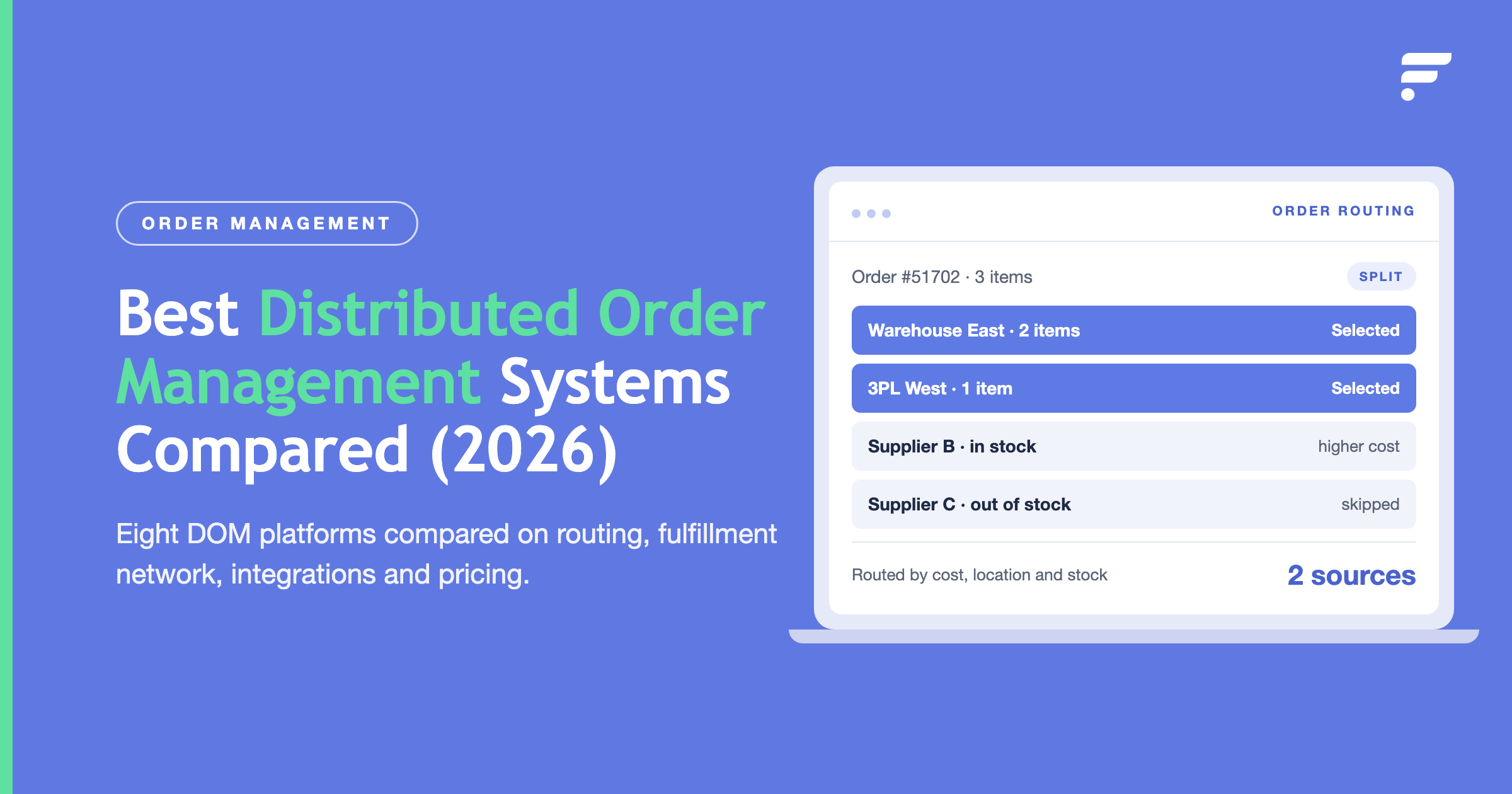
Intelligent Order Routing Without Manual Intervention When an order comes in, Flxpoint automatically determines the best fulfillment source based on your rules - whether that's inventory availability, shipping cost, delivery time, or vendor performance. Orders route to vendors instantly, purchase orders generate in NetSuite automatically, and fulfillment begins without anyone touching the order.
Financial and Accounting Benefits
Seamless Financial Reconciliation Every transaction flows properly into NetSuite's accounting system. Sales orders, purchase orders, and item fulfillments create automatically with correct SKU mappings, ensuring your books stay clean. The three-way match between orders, receipts, and invoices happens automatically.
Partial Shipment Management When vendors ship orders partially, Flxpoint creates appropriate Item Fulfillments in NetSuite for only the shipped items, keeping unshipped lines open. This maintains accurate order status and prevents premature revenue recognition.
Scalability Advantages
Connect Unlimited Vendors Without Development Add new suppliers through pre-built connections (API, EDI, FTP, email) without custom NetSuite development. Each vendor connection takes days, not months, and doesn't require expensive NetSuite customization.
Multi-Channel Order Consolidation Orders from your website, Amazon, eBay, Walmart, and other channels flow through Flxpoint into NetSuite as unified sales orders. One system of record, consistent order processing, simplified accounting.
Bulk Operation Processing Update thousands of products, process hundreds of orders, or sync massive inventory files without hitting NetSuite's API limits or slowing down your system. Flxpoint queues and optimizes these operations for NetSuite's consumption.
Data Intelligence Features
Vendor Performance Tracking Monitor fulfillment rates, shipping times, and error rates by vendor. Use this data to optimize routing rules and negotiate better terms. NetSuite alone doesn't track vendor-specific dropship metrics.
Advanced Mapping Templates Create sophisticated field mappings between vendor data and NetSuite fields. Handle custom fields, conditional logic, and data transformations that would require complex NetSuite scripting.
Exception Management Catch and resolve data issues before they hit NetSuite - missing SKUs, price mismatches, invalid addresses. Your NetSuite instance stays clean while Flxpoint queues exceptions for review.
Cost Savings
Reduced NetSuite Customization Instead of building custom SuiteScripts or workflows for each vendor integration, use Flxpoint's standardized connections. Save tens of thousands in development costs per vendor.
Lower Operational Overhead Automate tasks that would require dedicated staff - vendor onboarding, inventory updates, order routing, shipment tracking. Redeploy those resources to growth initiatives.
Prevent Costly Errors Automated SKU translation, inventory sync, and order routing eliminate manual data entry errors that lead to wrong shipments, oversells, and accounting discrepancies.
Practical Implementation Benefits
Non-Invasive Integration Flxpoint connects to NetSuite through standard APIs without modifying your core NetSuite configuration. Your existing processes continue working while gaining new capabilities.
Rapid Deployment Go live with vendor connections in weeks, not months. The pre-built NetSuite connector means no lengthy implementation projects.
Maintained Compliance All the proper NetSuite transaction types, audit trails, and accounting entries are preserved. Flxpoint respects NetSuite's data model while extending its capabilities.
The combination essentially transforms NetSuite from a traditional ERP into a modern, automated dropship operations platform without compromising its core strengths in financial management and reporting.
Conclusion
NetSuite ERP delivers a comprehensive suite of business management tools that transform how companies operate. From financial management and inventory control to global business operations, its integrated approach eliminates the silos that hold businesses back. The platform's AI-powered features and cloud-based architecture provide the foundation for growth and scalability.
However, businesses operating in specialized models like dropshipping need to recognize that even powerful platforms like NetSuite have limitations. While NetSuite handles the financial and operational backbone brilliantly, dropship retailers require additional automation layers to manage the complexity of multi-supplier, multi-channel operations effectively.
The NetSuite + Flxpoint combination represents the best of both worlds: enterprise-grade financial management and reporting from NetSuite, paired with purpose-built dropship automation from Flxpoint. This integrated approach ensures you're not forcing a square peg into a round hole – instead, you're using the right tools for each aspect of your business.
Want to see exactly how Flxpoint extends NetSuite's capabilities for your dropship operations? Book a demo with our team to explore your specific workflow requirements and discover how this powerful integration can eliminate manual processes, reduce errors, and scale your business efficiently.
Frequently asked questions
How do you integrate NetSuite with Shopify, Amazon, or Walmart?
There are three common ways. First, native or point-to-point connectors, which are cheapest but rigid and usually handle one channel at a time. Second, custom development, which is flexible but commonly runs from several thousand dollars into five figures and becomes your team's maintenance burden. Third, a purpose-built platform like Flxpoint, which connects multiple channels and vendors, normalizes their data, and pushes clean sales orders into NetSuite without per-channel custom code.
How does an enterprise dropshipping platform differ from Shopify dropshipping tools?
Consumer dropshipping tools mainly help small Shopify stores source products from marketplaces and suppliers. Enterprise dropshipping platforms focus on large-scale operations by supporting ERP integrations, supplier compliance, inventory synchronisation, intelligent order routing, purchase order automation, SLA monitoring, and multi-vendor fulfilment across numerous ecommerce channels and marketplaces.
How do enterprise dropshipping platforms handle order routing?
Enterprise platforms use configurable routing rules to determine the best supplier for every order. They evaluate inventory availability, shipping costs, warehouse location, supplier performance, customer location, delivery commitments, and business priorities before automatically assigning orders. This improves fulfilment efficiency, reduces manual work, and helps maintain consistent customer experiences.
How do enterprise dropshipping platforms track fulfilment across multiple vendors?
Enterprise platforms centralise shipment updates from every supplier into a single dashboard. They synchronise tracking numbers, shipping statuses, inventory updates, and delivery confirmations across ERP systems, ecommerce platforms, and marketplaces. This provides businesses with end-to-end visibility while giving customers accurate order tracking regardless of which supplier fulfils the order.
What are the best enterprise dropshipping platforms for large retailers?
The best enterprise dropshipping platform depends on your business model, integration requirements, and supplier network. Many retailers evaluate platforms based on ERP connectivity, marketplace integrations, automation capabilities, supplier management, inventory synchronisation, order routing, analytics, and scalability rather than simply comparing feature lists or pricing.
What are the top distribution ERP platforms for multi-channel order fulfilment and dropshipping?
Popular distribution ERP platforms include Oracle NetSuite, Microsoft Dynamics 365, SAP S/4HANA, Infor CloudSuite, Acumatica, and Epicor. Many businesses extend these ERPs with specialised order management or dropshipping automation platforms to improve supplier integrations, inventory visibility, fulfilment automation, and multi-channel commerce capabilities.
How do you connect a supplier to Shopify?
Connecting a supplier to Shopify usually involves installing an integration app, using an API connection, or integrating through middleware. Enterprise businesses often connect suppliers using EDI, ERP integrations, or dropshipping automation platforms that synchronise inventory, automate purchase orders, update tracking information, and manage supplier catalogues across multiple channels.
Can NetSuite integrate with ShipStation?
Yes. NetSuite can integrate with ShipStation to streamline shipping operations. The integration synchronises orders, shipping labels, tracking numbers, and fulfilment statuses between both systems. Businesses often use it to improve warehouse operations while maintaining accurate order records inside NetSuite and providing customers with timely shipment updates.
What is NetSuite automatic location assignment?
NetSuite Automatic Location Assignment determines the most appropriate fulfilment location for each order based on predefined rules. It considers factors such as inventory availability, warehouse location, shipping distance, and fulfilment priorities. This helps reduce shipping costs, improve delivery times, and optimise inventory allocation across multiple fulfilment centres.
How does NetSuite support multiple shipping routes?
NetSuite supports multiple fulfilment locations and shipping methods through inventory locations, warehouse management, and order fulfilment workflows. Businesses with more advanced routing requirements often integrate automation platforms that dynamically select suppliers or warehouses based on stock levels, shipping costs, customer location, and delivery commitments.
What is margin protection in enterprise dropshipping?
Margin protection refers to maintaining profitability despite supplier cost changes, shipping fees, or marketplace pricing pressures. Enterprise automation platforms help protect margins through automated pricing rules, supplier comparisons, inventory optimisation, shipping cost analysis, and intelligent order routing that selects the most cost-effective fulfilment option.