Linnworks Alternatives for NetSuite Ecommerce Integrations in 2026
Compare the five best Linnworks alternatives for NetSuite in 2026, with real pricing, the accounting gaps NetSuite teams hit, and where each option fits.
Linnworks was built for a legacy retail model: single-merchant physical stock ownership. Its architecture centers on warehouse management system logic, where the system expects a one-to-one relationship between a SKU and a physical bin location.
But modern NetSuite merchants running dropshipping and multi-vendor operations need a neutral operations layer that prioritizes data flow, supplier coordination, and fulfillment automation over physical inventory management. The challenge arises when traditional warehouse-first logic encounters virtual dropship feeds, external suppliers, and multi-source fulfillment.
One SKU maps to one physical bin you own
Dropship feeds and outside suppliers have no bin
One SKU routes across many sources, owned or not
That's when NetSuite operators start exploring a Linnworks alternative, one that can connect supplier data, simplify fulfillment workflows, and support the financial requirements of a growing ecommerce operation.
Why merchants are seeking a Linnworks alternative in 2026
Linnworks handles listing, stock sync, and carrier labels well. As NetSuite teams scale, though, the same walls show up in reviews and buyer research.
Lack of native accounting sync
Linnworks lacks native accounting integrations with NetSuite, requiring merchants to rely on third-party connectors or iPaaS middleware, such as Celigo or FarApp. This adds another layer between operational data and the general ledger, creating an additional point of failure in the accounting workflow.
Order-volume pricing that climbs at renewal
Linnworks publishes no public pricing and meters on monthly order count rather than revenue, so a low average order value or a peak-season spike pushes the bill up. Since Marlin Equity Partners took a majority stake, long-term sellers report steep renewal increases on top of unnamed onboarding fees.
One brand, two stitched-together products
After Linnworks acquired the SkuVault warehouse system in 2022, deeper warehouse control, plus batch and expiry tracking, sits in a separate layer and paid add-ons rather than one core system.
Thin supplier and dropship automation
Linnworks assumes you own the stock in your own bins, so ingesting raw supplier feeds over EDI, FTP, or API, applying MAP rules, and routing orders to dropship vendors takes custom work or extra tools. Reviewers also flag a dense interface and long support waits on the Linnworks G2 profile.
For a NetSuite merchant, the financial gap and the supplier gap are the two that decide a migration. They mark the point where a channel-and-warehouse tool stops and a supplier operation begins.
The top 5 Linnworks alternatives for NetSuite in 2026
Bring supplier catalogs into one system, sync supplier inventory, apply pricing and MAP rules, and route orders across dropship suppliers, owned warehouses, and 3PLs from the same rules engine.
Native Xero and QuickBooks Online sync, Bills of Materials, and batch and expiry tracking, plus an EDI path through Cin7 Omni.
Folds orders, inventory, procurement, and built-for-retail accounting into one system, with unlimited users on every contract.
Builds, maps, and publishes listings across Amazon, eBay, Walmart, and 100-plus channels, rather than only syncing stock for listings you've already created.
Built around orderbots that route each order to the best warehouse by cost, location, and stock, for brands running several fulfillment nodes or 3PLs.
1. Flxpoint
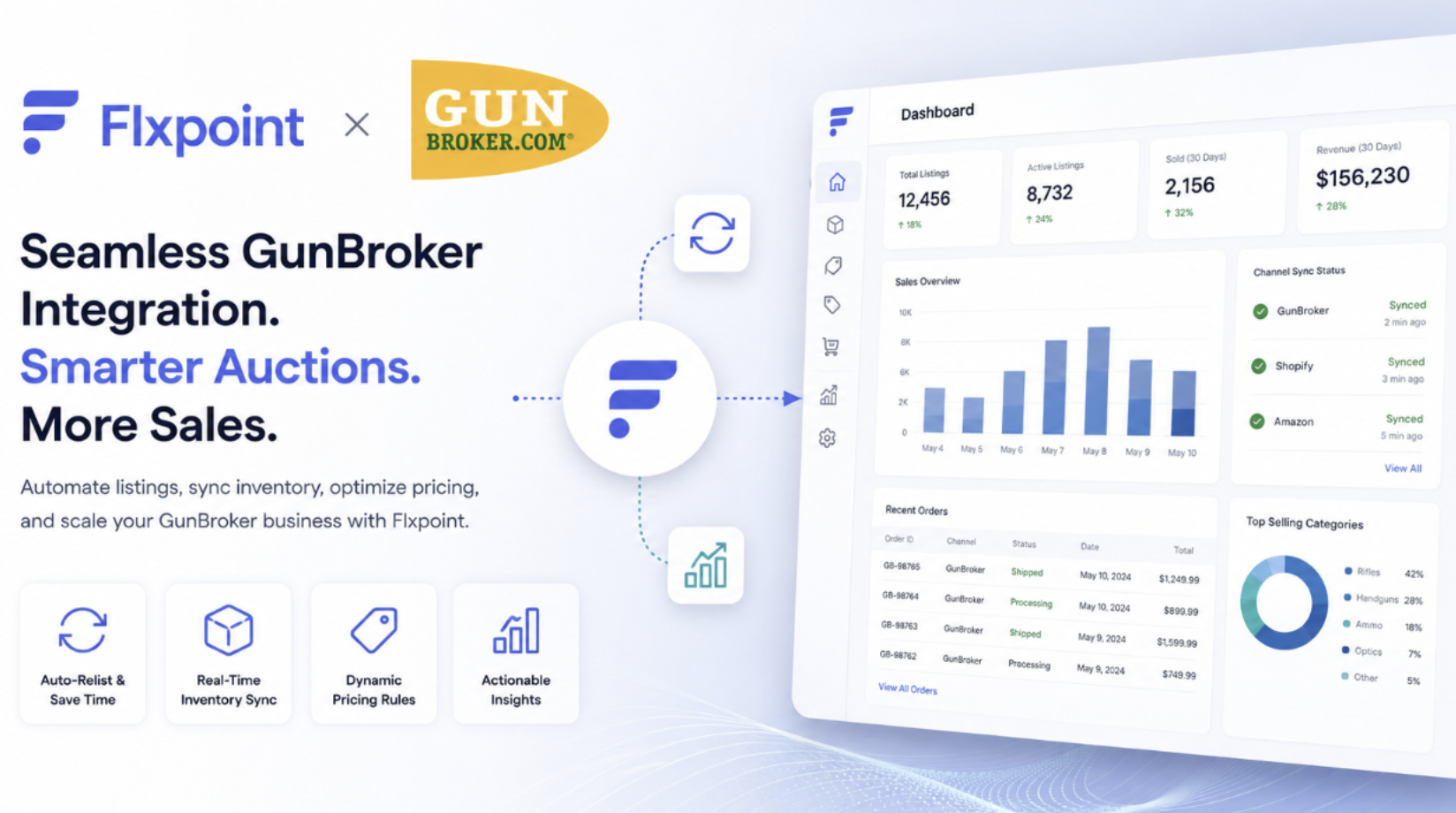
Flxpoint is a commerce operations platform built for the supplier side of ecommerce. You bring supplier catalogs into one system, sync supplier inventory, apply pricing and MAP rules, and route orders across dropship suppliers, owned warehouses, and 3PLs from the same rules engine.
For NetSuite users, Flxpoint handles supplier sourcing, product data, and multi-source routing while NetSuite stays the system of record, and NetSuite is one of Flxpoint's strongest integrations.
It connects suppliers by API, EDI, FTP, CSV, or manual workflows, builds and publishes listings through a native PIM, and posts published pricing that starts at $699 a month on the Business plan. You can see the full side-by-side on the Flxpoint vs Linnworks page.
The trade-off is honest: Flxpoint asks for some upfront setup to configure complex multi-vendor rules, which is the cost of running the operation rather than only syncing stock.
2. Cin7 (Core and Omni)
Cin7 answers the accounting gap head on, with native Xero and QuickBooks Online sync, Bills of Materials, and batch and expiry tracking on its plans, plus an EDI path through Cin7 Omni.
Cin7 Core starts at $349 a month on the Standard plan. The catch is that its order allowances run annually rather than monthly, so a busy quarter can burn through the year early, and its channel sync is templated rather than a full marketplace listing engine.
3. Brightpearl by Sage
Brightpearl folds orders, inventory, procurement, and built-for-retail accounting into one system, with unlimited users on every contract. For a NetSuite team, that overlap is also the catch.
Brightpearl is a system of record in its own right, it can't create or manage marketplace listings, and it runs on quote-based enterprise pricing, so it tends to replace tools rather than sit alongside your ERP.
4. Sellercloud
Sellercloud is the closest replacement for Linnworks Listing after Flxpoint, as it builds, maps, and publishes listings across Amazon, eBay, Walmart, and 100-plus channels, rather than only syncing stock for listings you've already created. It's well-suited for high-SKU catalogs.
The downside is cost and complexity: pricing is usage-based and sits at the top of this group, reported around $1,349 a month, with a heavier setup than lean tools.
5. Extensiv Order Manager
Extensiv Order Manager, formerly Skubana, is built around orderbots that route each order to the best warehouse by cost, location, and stock. It suits brands running several fulfillment nodes or 3PLs.
For NetSuite sellers it leaves gaps, though, with no marketplace listing creation and no raw supplier-feed ingestion, and it's more machinery than a single-facility brand will use.
Comparison matrix: Linnworks vs top alternatives
| Platform | Category | NetSuite financial alignment | Supplier feed & dropship automation | Marketplace listing creation | Starting price |
|---|---|---|---|---|---|
| Flxpoint (#1 pick) | Commerce operations platform | Strong, keeps NetSuite as system of record | Yes, API, EDI, FTP, CSV, manual, plus MAP rules | Yes, native PIM | $699/mo |
| Linnworks | Multichannel OMS and WMS | Weak, no native accounting, COGS overwriting | Limited, custom or third-party | Yes, Linnworks Listing | Quote-based, no public price |
| Cin7 (Core and Omni) | Inventory and light ERP | Strong, native Xero and QuickBooks | Limited | No, templated channel sync | $349/mo (Core) |
| Brightpearl by Sage | Retail operating system | Strong, built-in retail accounting | Workflow-based | No | Quote-based |
| Sellercloud | Multichannel listing and OMS | Moderate, connector-based | Limited | Yes | Usage-based, reported ~$1,349/mo |
| Extensiv Order Manager | Multi-warehouse OMS | Moderate | Routing-based, no supplier feeds | No | Quote-based |
Why Flxpoint is the stronger NetSuite connector
The right alternative depends on the operational gaps your business needs to address. If your priority is native accounting, Cin7 or Brightpearl may better fit your requirements. For listing creation, Sellercloud offers relevant capabilities, while Extensiv focuses on multi-warehouse routing.
For NetSuite merchants whose growth depends on suppliers, dropship vendors, and multi-source fulfillment, Flxpoint addresses several of the operational gaps that can arise when using Linnworks with NetSuite.
It normalizes multi-vendor catalog feeds across CSV, FTP, EDI, and API formats, automates purchase order creation, and routes orders based on vendor stock availability, profit margins, geographic proximity, and shipping costs.
Flxpoint is also designed to support high-throughput, multi-channel data flows, while keeping NetSuite as the financial single source of truth. It passes order and line-item valuations without retroactively rewriting historical cost data, helping maintain accurate COGS tracking, general ledger records, and margin reporting.
This combination of supplier automation, fulfillment routing, and financial alignment helps NetSuite merchants move beyond managing the inventory they own toward coordinating their broader multi-source fulfillment operation.
Frequently asked questions
Flxpoint connects your suppliers, automates order routing across dropship, warehouse, and 3PL sources, and feeds clean data into NetSuite as your system of record. See how the Flxpoint NetSuite integration works, or book a demo to map it to your workflow.
Book a demo